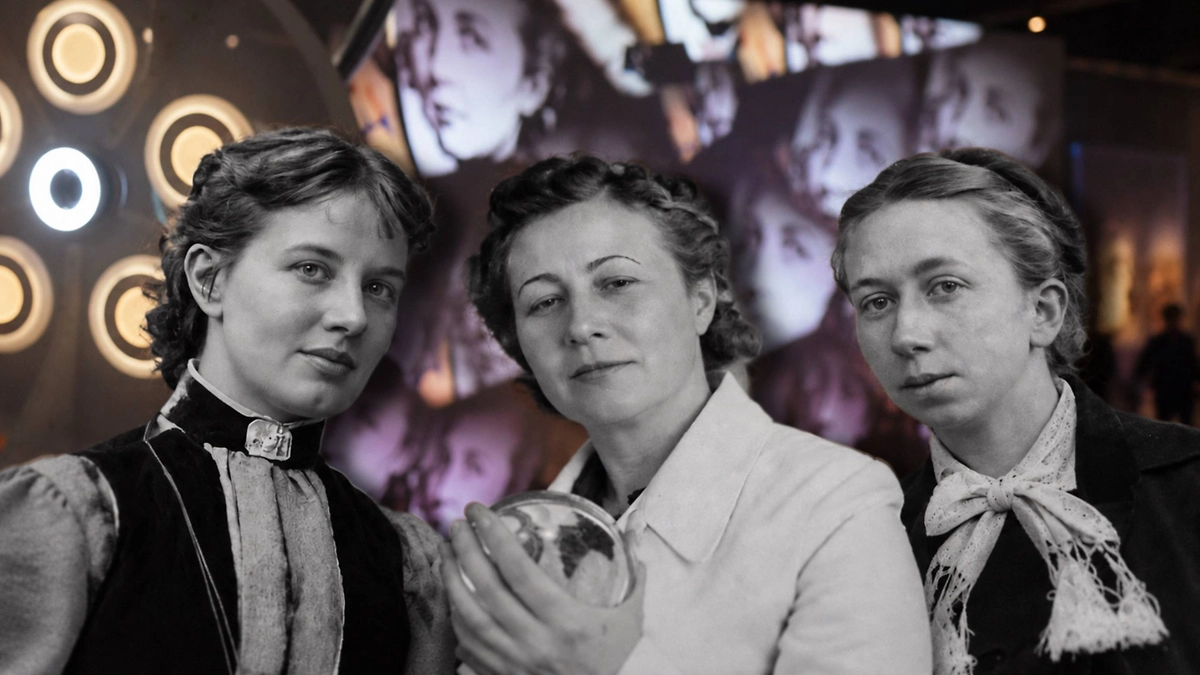
The exhibition "Women Scientists: Science Without Permission" at the Moscow Museum brings to light the remarkable contributions of women in various scientific fields, despite their names often fading from public memory. Running from September 3 to November 10, 2026, the exhibition combines the biographies of pioneering female researchers with multimedia art and modern scientific narratives, showcasing their significant impact in physics, mathematics, chemistry, geology, microbiology, cognitive science, climatology, and astronomy.
While the achievements of these women are substantial, their stories often remain overshadowed. For instance, Sofia Kovalevskaya stands out as not only the first female professor in mathematics in Northern Europe but also as a world-class mathematician known for her groundbreaking work on the motion of rigid bodies. Her life story, filled with challenges such as barriers to education in the Russian Empire and a fictitious marriage for academic freedom, adds a compelling narrative that elevates her in the collective memory.
Conversely, Julia Lermontova, the first Russian woman to earn a doctorate in chemistry, has largely been forgotten despite her contributions to early petroleum processing. After studying in Germany, she developed an innovative setup for continuous oil processing using superheated steam, which played a role in the early stages of Russian petrochemistry.
The exhibition poses critical questions about why some scientific figures are remembered while others are not, emphasizing the need to revive the narratives of these women who have made significant strides in science against overwhelming odds.
The implications of this exhibition extend beyond history; they challenge the current scientific landscape, prompting both the market and competitors to acknowledge and integrate the contributions of women into the broader narrative of scientific achievement. This recognition could pave the way for a more inclusive future in science, encouraging the next generation of female scientists.
Informational material. 18+.