

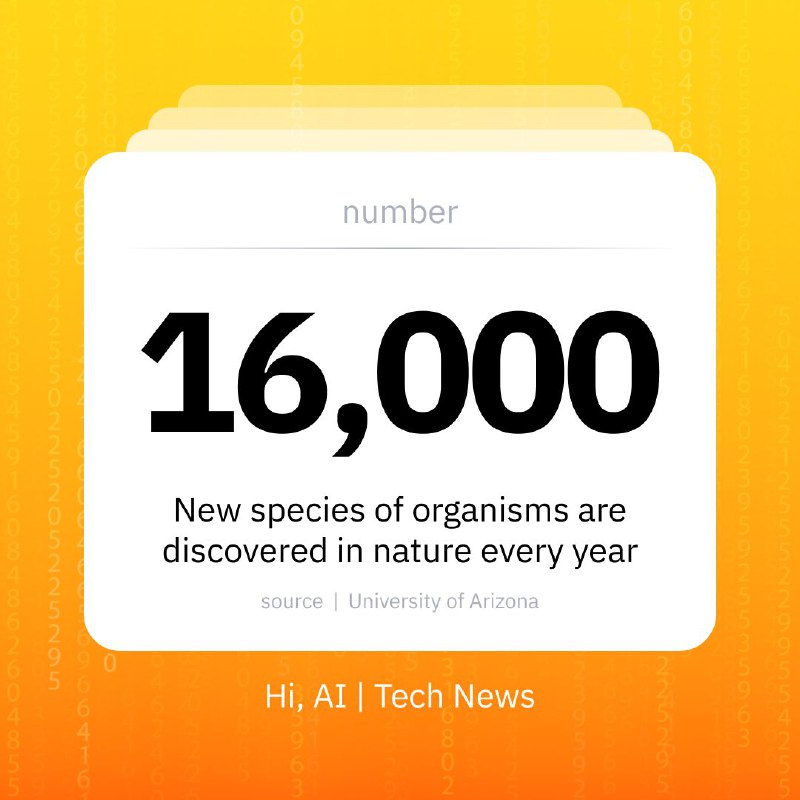
Researchers from the University of Arizona have revealed that more than 16,000 new species are discovered each year, contributing to the 2.5 million species already known to science. Notably, 15% of these species have been identified within the last two decades, marking the fastest rate of species discovery in human history. Between 2015 and 2020, the average annual discovery rate hovered around 16,000 species, with approximately 10,000 being animals, about 2,500 classified as plants, and roughly 2,000 identified as fungi. This surge in the identification of new species significantly surpasses the rate of extinctions, which stands at approximately 10 species each year. Despite these findings, researchers assert that the actual biodiversity on Earth is likely much more extensive than what has been recorded. They estimate that there could be as many as 115,000 fish species, in contrast to the approximately 42,000 currently recognized, and around 41,000 amphibian species, compared to the 9,000 documented so far.
Informational material. 18+.