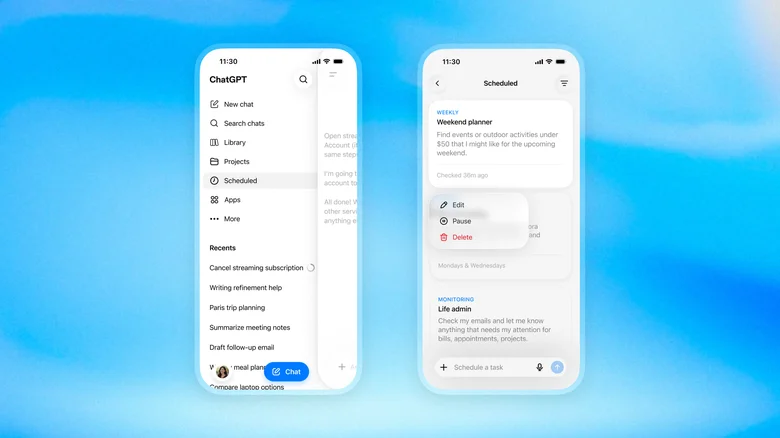
OpenAI has launched a groundbreaking new technology called Dots, introducing a new class of AI agents capable of autonomously executing complex, multi-step tasks. These agents can manage projects, utilize various applications, write and test code, and continue operations without human intervention. The company has emphasized that Dots can function around the clock and adapt over time to user preferences.
What sets Dots apart from traditional AI models like ChatGPT is their access to a dedicated computing environment. Each Dot operates on a distinct cloud computer, complete with its own browser and account for managing access and permissions. Users can view what their Dot is doing through a virtual computer interface.
By default, Dots operate in an isolated cloud environment separate from the user's device. However, users have the option to connect their Dot to their personal computer for more direct interaction. The underlying technology for Dots is based on the GPT-6 Astra model, and they are integrated with OpenAI's ecosystem of plugins, allowing them to interact with over 4,000 applications. Communication with Dots can occur via ChatGPT, text messages, Slack, Microsoft Teams, and even voice calls, maintaining context across these platforms.
A notable feature of Dots is their ability to independently progress on tasks. Users are not required to monitor a chat continuously; instead, the agent can take a project, manage its various stages, track updates, and only reach out to the user when necessary for decision-making.
For instance, a Dot can monitor user feedback on an application, identify recurring issues, make code corrections, and prepare them for review by a developer. In another scenario, it could manage product launch preparations, adjusting plans and documentation as product specifications change, and readying updates for human approval. For research tasks, a Dot can iteratively analyze incoming data, respond to unexpected outcomes, and revise illustrations and conclusions.
Interestingly, Dots are designed for both task completion and proactive engagement. OpenAI refers to this as "proactive research," where the agent can interact with connected applications in the background to find ways to continue ongoing work. Currently, these background operations have limited capabilities; for example, they cannot send messages, alter application content, or control the user's browser and computer.
The autonomy of Dots is governed by a permissions system. Users determine which applications the agent can access and set rules for specific actions, such as allowing automatic approval, requiring user confirmation, or outright prohibition. Dots will also request confirmation for actions that affect user accounts or involve sensitive information, with certain operations, like password changes, reserved strictly for user intervention.
To address potential security threats, Dots include a mechanism to halt or cease tasks when a risk is detected. OpenAI stresses that while Dots can be highly effective, users must verify results that could influence significant decisions or actions.
OpenAI is also developing specialized versions of Dots for businesses, which will include separate accounts, unique credentials, and customized access to corporate systems necessary for specific roles. The company is currently testing scenarios for procurement, invoice processing, email marketing, customer support, and contract negotiations.
Initially, Dots will be available to ChatGPT Pro and Business Premium users, with a beta version offered to enterprise clients. The first Dot is included in the subscription plans at no additional cost, though OpenAI intends to implement a monthly fee for adding new agents or enhancing their capabilities in the future.
The introduction of Dots signifies a major advancement in AI technology, potentially reshaping how businesses operate and interact with technology. Competitors will need to innovate rapidly to keep pace with OpenAI's developments in autonomous AI solutions.
Informational material. 18+.