

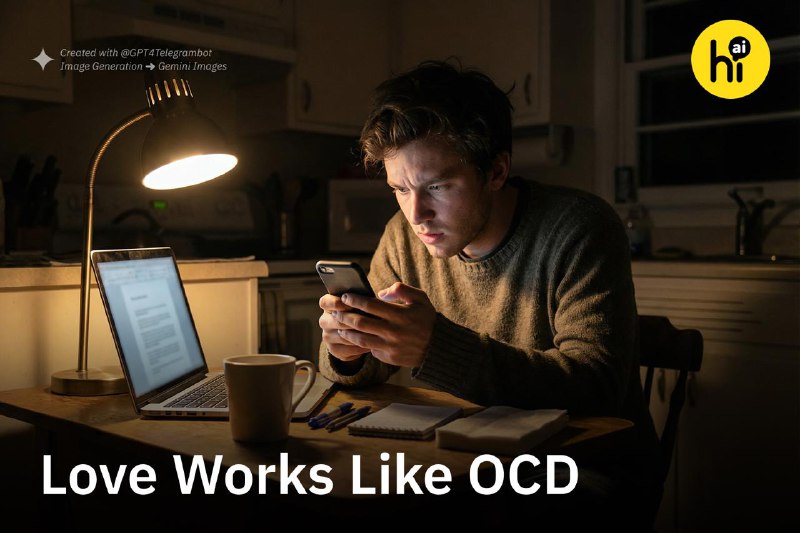
Japanese researchers have discovered that the brain functions in similar ways when experiencing love and obsessive-compulsive disorder (OCD). Their study involved 51 young men who were in love, who underwent MRI scans while viewing images of their girlfriend, a female friend, and an unfamiliar woman, presented individually. Following each image, there was a brief pause during which participants had to quickly press a button; a timely response would trigger a smile from the woman in the photo, allowing the researchers to capture the anticipation pattern in real time.
The findings revealed that viewing a romantic partner activated a distinct pattern of brain activity that was markedly different from the responses elicited by other women. This unique activity was noted in two specific areas of the brain: the nucleus accumbens, which is part of the brain's reward system, and the anterior insula, associated with empathy and obsessive thoughts.
Interestingly, the study found that the stronger the "love imprint" observed in the anterior insula, the more participants reported obsessive thoughts about their partner in the ten days following the experiment. The researchers noted that the emotional attachment experienced during love closely resembles the neurological mechanisms involved in OCD.
This connection is not entirely new; previous research from 1999 indicated that individuals who had recently fallen in love exhibited lower levels of serotonin transporter proteins, a reduction also seen in those with OCD. However, it is essential to note that while the brain's activity in love may mirror that of OCD, it typically returns to normal once the initial phase of romance wanes, unlike in cases of chronic OCD.
Do you believe that love can indeed make you feel a bit crazy? Responses to this question vary widely, with some wholeheartedly agreeing while others claim they have never experienced such feelings.
Informational material. 18+.