

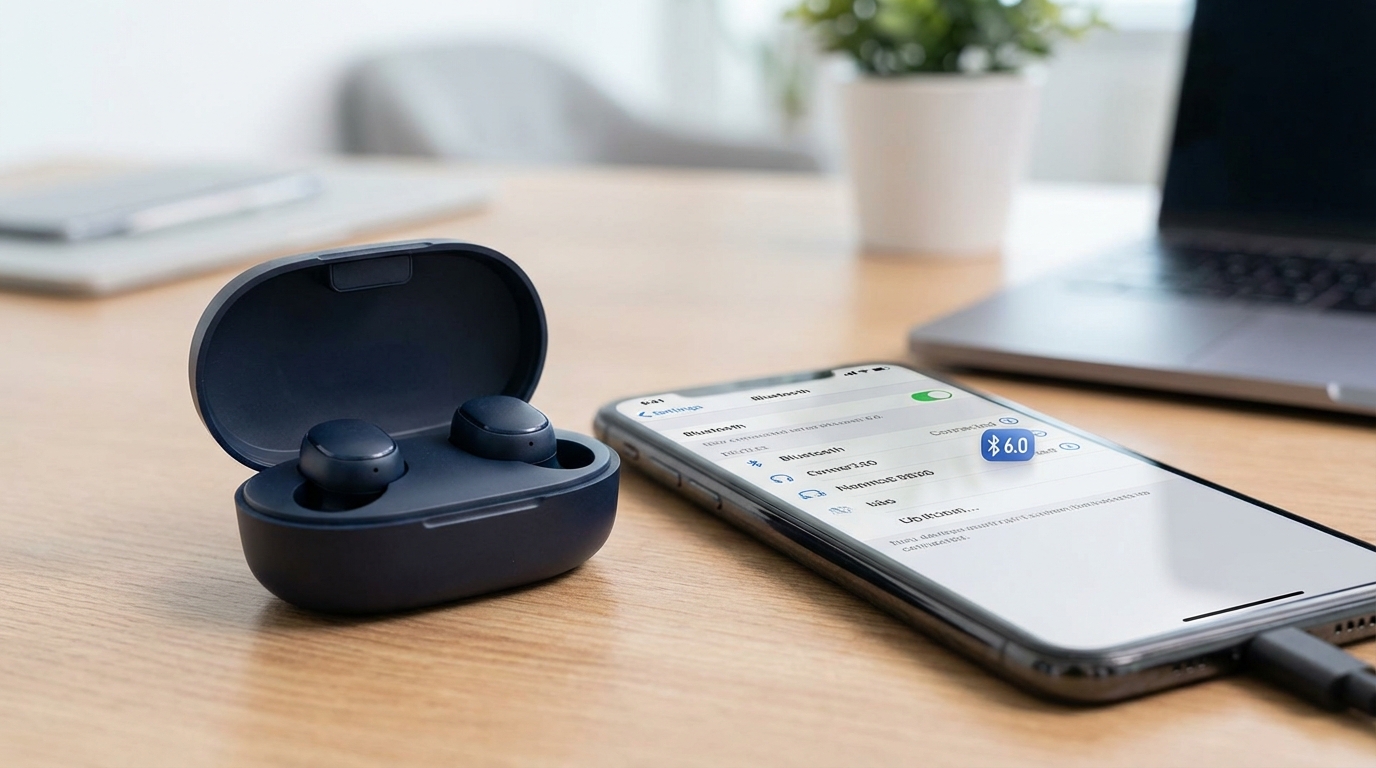
In September 2024, the Bluetooth Special Interest Group (SIG) introduced Bluetooth 6.0, which promises to revolutionize audio devices thanks to a host of new features. Among these are improved connection efficiency, reduced latency, and the ability to universally track devices.
Although many smartphones released in 2025 already support the new technology, accessories such as headphones and headsets have yet to fully adapt to the standard. Nevertheless, it is expected that by 2026 more devices with Bluetooth 6.0 support will appear on the market.
One of the key features of the new standard is the improvement of the device connection process. Bluetooth 6.0 offers faster and more reliable synchronization, which will be especially appreciated by users of the Bluetooth multipoint function that allows multiple devices to be connected simultaneously. Thanks to Decision‑Based Advertising Filtering and Monitoring Advertisers, devices will be able to restore connections more quickly after interruptions, which will greatly simplify their use.
Other significant improvements include reduced latency, which can be critical for mobile gaming and augmented reality. Bluetooth 6.0 optimizes the Isochronous Adaptation Layer (ISOAL), allowing audio data to be transmitted faster and with lower delays. This means users will be able to enjoy wireless sound without needing to plug their headphones in with cables.
Another interesting feature is Bluetooth Channel Sounding, which gives users the ability to precisely track their devices with centimeter‑level accuracy. This opens new horizons for technologies similar to Find My Device, enabling the location of devices that do not have an ultra‑wideband (UWB) chip. Since most modern chips are already compatible with Bluetooth, this greatly simplifies the integration of new technologies into headphones and headsets.
Despite the fact that new standards are usually adopted more slowly in accessories than in smartphones, it is expected that the situation will change in the coming years. This will open new opportunities for both users and competitors in the audio‑device market, offering more efficient and innovative solutions in the field of wireless communication.