
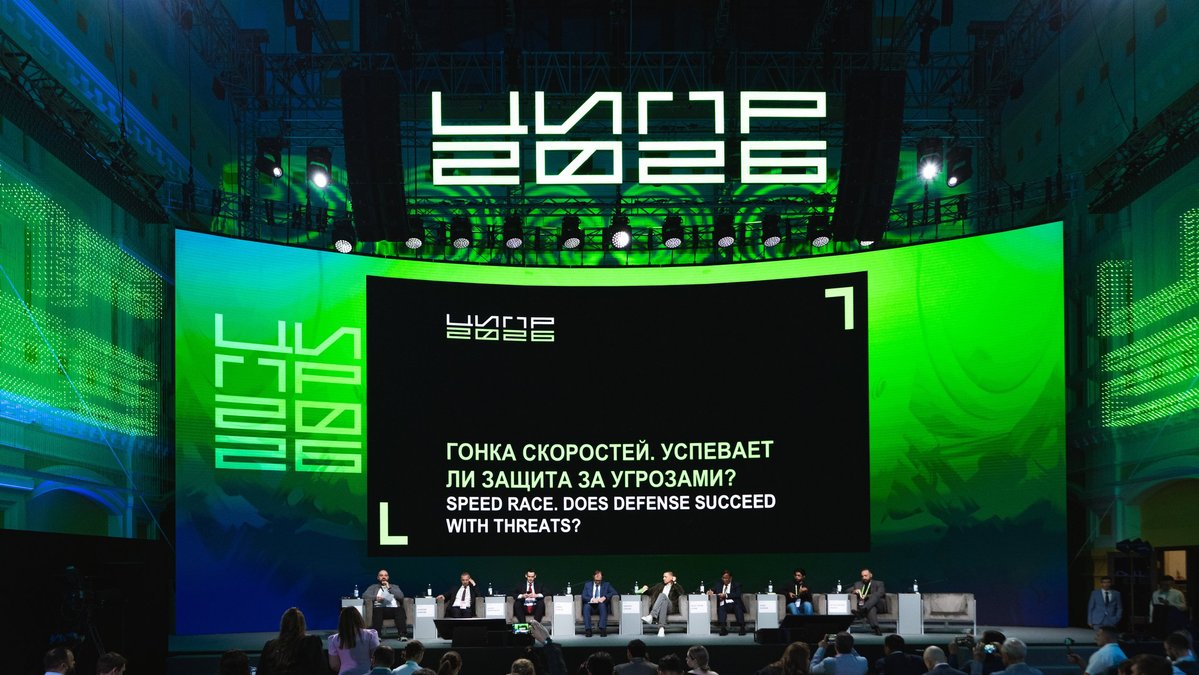
The XI CIPR-2026 conference, held from May 18 to May 21 in Nizhny Novgorod, has reaffirmed its status as a key international platform for discussions on digital economy and technology. This year, the event saw participation from more than 300 foreign delegates representing 46 countries, including India, Serbia, Argentina, China, the Philippines, and several nations from Southeast Asia, Africa, and the Middle East.
The conference featured over 10 international companies showcasing their stands, and official delegations from countries such as Zimbabwe, Myanmar, Kazakhstan, Laos, Uganda, Oman, Abkhazia, and Ivory Coast actively participated in the business program. The growing interest in CIPR from the global market highlights its role as a central venue for consolidating international digital stakeholders, facilitating technology agreements, and discussing global trends ranging from artificial intelligence to new financial architectures.
The business agenda included 11 specialized discussions with international speakers. A prominent event was the plenary session titled "Map of Digital Industry: Roles and Responsibilities on a Global Scale," which brought together representatives from various nations. Key figures included Zimbabwe's First Vice-President Constantino Chiwenga, Myanmar's Minister of Science and Technology Myo Thein Gyi, and India's representative from the Ministry of Electronics and Information Technology, Saranyan Krishnan. The session, moderated by RT presenter Rory Suchet, focused on how digitalization and artificial intelligence are transforming global supply chains, creating new innovation hubs, and necessitating a reevaluation of economic growth strategies. A major takeaway was the consensus that technology should enhance sovereignty and citizen welfare rather than replace human involvement.
In partnership with the United Nations Industrial Development Organization (UNIDO), a session titled "Building Ecosystems: Infrastructure for Smart and Advanced Manufacturing in Developing Countries" was also held. Additionally, a Russian-Indian session addressed "From AI to Implementation: How Technology, Trust, and Infrastructure Shape International Digital Projects," moderated by Kirill Kosminsky, CEO of SPEK Investment. Participants discussed the implementation of AI-driven speech and video analytics, international distributed IT teams, digital trust, and cybersecurity.
The exhibition featured solutions and products from foreign companies from Belarus, China, India, Angola, and Uzbekistan. Belarus showcased a national stand focusing on digital economy organizations, while Chinese firms presented innovations in intelligent manufacturing, ecology, and healthcare. Indian companies Meril and SRB Group introduced innovative robots, medical implants, and VR/AR technologies. Angola highlighted solutions for the oil and gas industry, while Uzbekistan showcased the potential of its IT park. A special negotiation platform, the "Digital Attache Video Conference Room," allowed Russian companies to receive online consultations from trade representatives about exporting IT services.
Throughout the conference, several bilateral meetings took place with heads of industry ministries from friendly nations. Russia's Ministry of Digital Development, represented by Deputy Minister Alexander Shoytov, engaged in constructive discussions with delegations from Laos, Zimbabwe, Myanmar, and Serbia, focusing on future cooperation in areas such as 5G/6G network development, artificial intelligence, and the digitization of public services.
Several Russian companies signed cooperation agreements with international partners. For instance, "Russian Post" and China's Wayzim Technology Co. signed a memorandum to modernize logistics infrastructure. Sivill Tech reached agreements with "Safety Code" and the software developers' association "RUSSOFT" to enhance business relations in cybersecurity between Russia and Laos. The "Gorky Tech" organization and NEIMARK University established strategic cooperation with the ASEAN Business Structures and Entrepreneurs Alliance (B2BASEAN) to promote international collaboration in scientific, technical, and educational sectors. Furthermore, a Russian trading house signed an exclusive rights agreement with Angola's Welwill Oil & Gas LDA for promoting Russian products in Africa.
Notably, this conference marked the first attendance of a delegation led by Zimbabwe's First Vice-President Constantino Chiwenga. As a distinguished guest, he spoke at the plenary session, discussing the Global South's transition from mass production models to leadership in creating new digital products.
The Autonomous Province of Vojvodina (Republic of Serbia) also sent a delegation led by Deputy Prime Minister Tomislav Zigmanov, resulting in a memorandum of intent for cooperation between Nizhny Novgorod and Vojvodina, continuing a partnership that began in 2018 and enhancing collaboration in education and technology.
Myanmar was represented by a delegation led by Minister of Science and Technology Myo Thein Gyi, who spoke on the session "Speed Race: Is Protection Keeping Up with Threats?" and met with Governor Gleb Nikitin to discuss the development of scientific and educational ties. Kazakhstan's delegation, headed by Consul General Erlan Iskakov, engaged in discussions with Governor Nikitin about localizing production, organizing business missions, and facilitating international cooperation.
The conference concluded with several key agreements, including a memorandum of intent for cooperation between Nizhny Novgorod and Vojvodina, an expansion of educational programs with Myanmar, and further discussions on collaboration with Zimbabwe. This vibrant exchange at CIPR-2026 illustrates a strong commitment to advancing international partnerships in technology and digital innovation, positioning participants to compete more effectively in the evolving global market.
Informational material. 18+.