
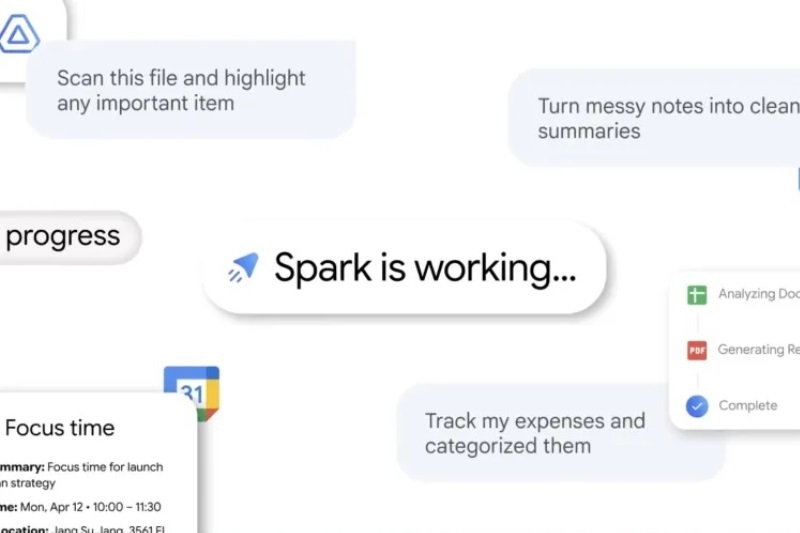
Google is making significant strides in artificial intelligence (AI), with its future developments heavily dependent on user trust and access to personal data. During the I/O 2026 conference, the tech giant unveiled several intriguing AI features that leverage vast amounts of user information. Among these innovations is the always-on AI assistant, Gemini Spark, designed to assist with tasks such as organizing events and providing daily summaries of scheduled activities. Additionally, Google is enhancing AI capabilities within Gmail, enabling the generation of to-do lists and responses to emails.
While these features appear beneficial, they rely on an AI engine that processes personal data. Unlike competitors like OpenAI and Anthropic, which allow integration with other apps and data, Gemini’s access to personal information stored in Google services is governed by a straightforward consent menu. This distinct approach gives Google a competitive advantage in the AI market.
The company began integrating personalized features in 2024, incorporating Gemini into various Workspace applications such as Gmail and Docs. At that time, the AI could perform tasks like document searches and drafting emails. The Deep Research tool, based on Gemini, accesses users' emails, cloud storage, and chats to utilize this data effectively.
In recent months, these integrations have expanded, with the introduction of Personal Intelligence in January. This feature allows Gemini to analyze data from Gmail, Google Photos, and YouTube without additional prompts, enabling automatic data extraction to enhance personalized responses.
Despite the optional nature of data access for Gemini, the success of Google’s AI tools hinges on whether users are willing to share their private information. For instance, the Daily Brief feature scans incoming emails and calendar events for subscribers of Google AI Plus, Pro, and Ultra.
Gemini Spark operates as a personal assistant within Workspace applications, capable of handling various tasks around the clock. Its capabilities extend to interacting with third-party services like Canva and Spotify, and Google plans to enable access to local files on Apple Mac computers, mirroring the functionality seen in OpenClaw.
However, many users may hesitate to grant such a comprehensive data access to an AI assistant. Yet, the success of tools like OpenClaw suggests that AI systems are transitioning from novel concepts to practical productivity tools that require user data access to function effectively. Ultimately, the critical question remains: how much trust will consumers place in the companies behind these technologies? This dynamic will shape the market landscape and influence how competitors position their own AI offerings.
Informational material. 18+.