

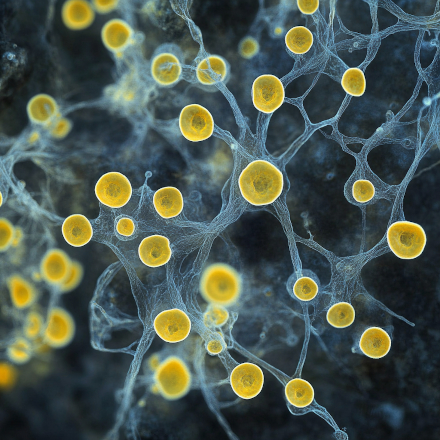
The intriguing concept of giant sulfur bacteria raises a thought-provoking question: what would a world ruled by these extraordinary organisms look like? Recently, I penned an article on this hypothetical scenario, which caught the attention of Turkish scientists who sought to delve deeper into the subject. This article serves as a translated version of that engaging interview, with the kind permission of my colleagues.
Giant sulfur bacteria, specifically those belonging to the order Thiotrichales, are known for their remarkable size, comparable to eukaryotic cells and small multicellular organisms. These bacteria utilize inorganic sulfides as their primary nutrient source and derive energy from their oxidation, presenting a unique adaptation in the microbial world.
Following the publication of my article, I was contacted by Philip Meisman, a professor at the University of Antwerp, who shared insights about similar bacteria that form long filaments and oxidize sulfides in a manner akin to the Thiotrichales. However, these organisms belong to a different phylogenetic group, specifically the family Desulfobulbaceae, with Desulfobulbus propionicus as a representative species. The evolutionary connection between cable bacteria such as Candidatus Electrothrix and Candidatus Electronema and their relatives is surprising, yet it reinforces the morphological diversity present among sulfur bacteria.
In my view, giant sulfur bacteria represent a distinct form of life among those that feed on hydrogen sulfide rather than fitting neatly into a specific taxonomic category. In discussing their habitats, we noted that hydrogen sulfide typically resides in the deeper layers of certain bodies of water, reaching these depths through geological sources or organic matter decomposition. In contrast, oxygen is found in the upper layers where it diffuses from the atmosphere. Given that giant sulfur bacteria require both environments for survival, they have developed fascinating strategies to thrive.
It is important to clarify that these bacteria can utilize not only oxygen as an oxidizer but also nitrate. This adaptation enables them to survive in the chemically reactive environments where sulfide and any strong oxidizer are spatially separated. The constant pressure of natural selection compels giant sulfur bacteria to grow longer, allowing them to traverse the space between oxygen and sulfide clusters. This evolutionary pathway has led to the independent emergence of giant sulfur bacteria in at least two different taxa, demonstrating how certain environments favor their development.
While eukaryotic cells generate energy through mitochondria, prokaryotic cells, including giant sulfur bacteria, rely on their cell membranes to create proton gradients for energy production. This fundamental mechanism highlights the efficiency with which these bacteria can adapt to their environments, despite lacking the complex structures seen in eukaryotes.
Contrary to common assumptions, the energy consumption of a cell is proportional to its volume, which raises questions about how these gigantic sulfur bacteria manage their energy needs. As they grow, their volume increases faster than their membrane surface area, presenting a challenge for ATP synthesis. To overcome this limitation, bacterial cells can take two approaches: multicellularity, where small cells can form long filaments, or the evolution of a single giant cell containing numerous "mini-cells" that function similarly to mitochondria in eukaryotes.
The existence of giant sulfur bacteria not only fascinates scientists but also poses intriguing implications for our understanding of microbial life and evolution. As researchers continue to explore these remarkable organisms, the potential for new discoveries in biotechnology and environmental science remains vast, signaling a competitive edge for those who harness their unique capabilities.
Informational material. 18+.