
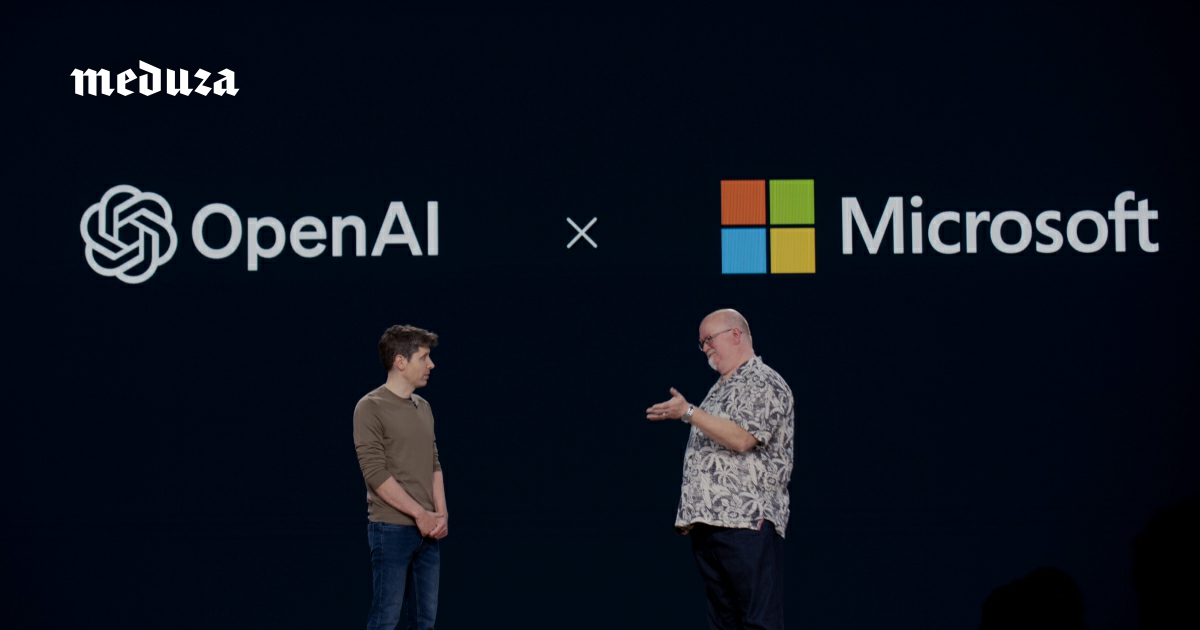
In a significant shift in the tech landscape, Microsoft has concluded its exclusive partnership with OpenAI after seven years of collaboration. The announcement, made on April 27, 2026, marks a pivotal moment for both companies as they seek to explore new opportunities in the rapidly evolving artificial intelligence sector.
OpenAI, which was once a little-known startup, received a monumental investment of one billion dollars from Microsoft in 2019, granting the tech giant exclusive rights as the cloud provider for OpenAI's products. This partnership allowed Microsoft to leverage OpenAI's cutting-edge AI technologies, integrating them into its own offerings while providing crucial financial and computational resources to the startup.
However, as the AI landscape has become increasingly competitive with the emergence of new players such as Anthropic and its Claude language models, OpenAI has sought greater independence. The evolving dynamics led to a re-negotiation of their partnership terms, reflecting OpenAI's desire to collaborate with multiple cloud service providers and lessen its reliance on Microsoft.
Under the new agreement, Microsoft will continue to be OpenAI's primary cloud partner, ensuring that OpenAI's AI products will still be featured on Microsoft Azure. However, OpenAI is now free to utilize services from other cloud providers as well, including Amazon, with which it recently formed a partnership. This aspect of the agreement has reportedly caused some tension within Microsoft, which had considered legal action to protect its interests.
The updated terms will allow Microsoft to benefit financially without sharing revenue with OpenAI, although OpenAI will still owe Microsoft a portion of its revenue until 2030, under a limit that has not been disclosed. Analysts estimate that this could translate into billions in earnings for Microsoft, particularly following the company's recent financial report, which indicated that its investment in OpenAI had yielded nearly $7.6 billion in net profit.
As OpenAI moves toward potential market independence, the possibility of an initial public offering (IPO) appears more attainable. However, concerns linger among some executives about the company's readiness to meet the stringent reporting standards required of publicly traded entities. Despite these uncertainties, the changes to their partnership may accelerate OpenAI's path to going public.
In summary, the end of Microsoft's exclusive partnership with OpenAI represents a new chapter for both organizations. This development may enhance competition in the AI sector, allowing OpenAI to thrive independently while Microsoft can continue to innovate and collaborate with a broader range of AI companies.
Informational material. 18+.