

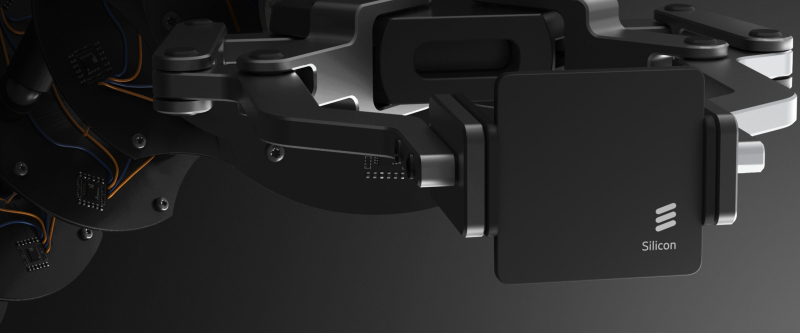
Ericsson has unveiled its first AI-RAN product lineup, reaffirming its commitment to a strategy centered around custom ASICs to enhance radio access network (RAN) performance. As the wireless industry increasingly turns to virtualized and cloud-based RAN solutions utilizing Intel's general-purpose processors (GPP), Ericsson continues to invest in proprietary chips for high-performance tasks, as highlighted by industry experts. Despite Intel's ongoing role as a key partner, the company faces hurdles with AMD and NVIDIA, which have not yielded fruitful collaborations.
Ericsson's RAN solution portfolio is built on two main architectures, primarily relying on ASICs developed in-house and in partnership with Intel. This portfolio also includes Cloud RAN, which integrates Ericsson's software stack with Intel Xeon EE processors. However, the expectation that virtualization would enable a decoupling of hardware from software has not materialized, leaving Intel as the sole chip supplier for mass deployment, presenting certain risks.
Throughout its history, Ericsson has confirmed "commercial support" solely for Intel's solutions, while relationships with AMD, Arm, and NVIDIA remain limited to "prototype support." This stagnation in chip diversity within the vRAN ecosystem is concerning, especially as the integration of AI into RAN software adds further complexity, potentially deepening the company's reliance on a single vendor's hardware.
Industry observers express skepticism regarding Ericsson's pursuit of a "single software stack" for heterogeneous hardware platforms. While hardware and software disaggregation is achievable at higher layers (L2/L3), the PHY layer (L1) remains highly optimized for specific silicon, making it resource-intensive. Initially, Ericsson aimed for L1 code portability between x86 (including AMD) and Arm SVE2 (NVIDIA Grace) to match Intel's AVX-512 capabilities. However, achieving high performance on these platforms without significant refactoring poses a considerable engineering challenge.
A critical bottleneck in L1 traffic processing is Forward Error Correction (FEC), traditionally requiring dedicated hardware acceleration. Ericsson initially relied on offloading FEC tasks to discrete Intel PCIe accelerators. Subsequently, Intel integrated FEC acceleration into its Xeon EE processors through vRAN Boost. Attempts to utilize AMD's FPGAs revealed low energy efficiency, while NVIDIA's GPUs were deemed too expensive for the task.
The emergence of AI-RAN has altered the economic landscape, allowing for the use of accelerators for both RAN and AI tasks, sparking interest in Google’s tensor processing units (TPUs). Nevertheless, the plans for a unified software approach underscore the challenges faced in implementing this vision. While L2 and higher levels utilize a universal code base across hardware platforms, L1 necessitates adaptations specific to particular chips.
To mitigate dependency on a single chip supplier, Ericsson is prioritizing the development of Hardware Abstraction Layers (HAL), enabling software portability across various hardware platforms with minimal modifications. Key initiatives include the implementation of the Baseband Device (BBDev) interface to separate RAN software from the underlying hardware. There is even consideration for integration with NVIDIA CUDA, dependent on broader industry standardization.
In terms of radio communication, which is less amenable to complete virtualization, Ericsson is embedding Neural Network Accelerators (NNA) directly into radio modules. These programmable matrix cores are optimized for data processing in Massive MIMO systems, facilitating beamforming and channel estimation in milliseconds while adhering to strict power constraints. The new AI radio modules are equipped with Ericsson ASICs featuring NNAs, enhancing local inference capabilities in Massive MIMO radio systems and enabling real-time optimization.
This steadfast focus on custom ASICs amid challenges with major chip suppliers suggests that Ericsson is positioning itself to maintain a competitive edge in a rapidly evolving market, while also presenting potential hurdles for its competitors who may struggle with similar dependencies and integration complexities.
Informational material. 18+.