

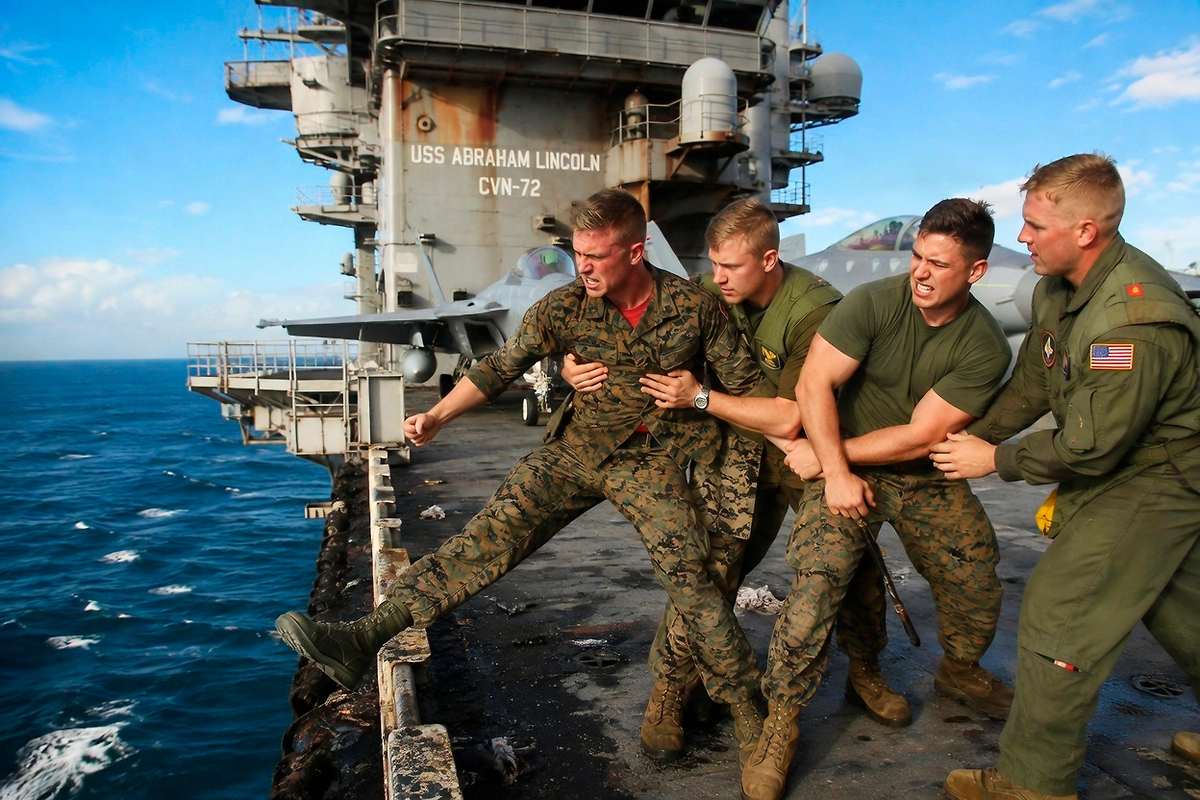
The USS Abraham Lincoln, a Nimitz-class aircraft carrier, has become a symbol of distress within the U.S. Navy, as reports emerge of sailors enduring appalling conditions during an unprecedented 260 days at sea. Originally deployed from San Diego for a seven-month mission, the carrier was redirected to the Middle East amid rising tensions with Iran, leading to an extended deployment that has left its crew facing severe mental and physical strains.
Family members of the sailors have raised alarms about the deteriorating morale aboard the ship, with some reporting their loved ones contemplating jumping overboard to escape the relentless hardships. At least two sailors have attempted to leave the vessel by jumping into the ocean, prompting rescue operations to retrieve them. The situation has escalated to the point where congressional intervention has occurred, with officials demanding accountability from the Pentagon regarding the troubling reports of mold-infested living quarters, broken toilets, and insufficient food supplies.
Conditions on the Lincoln have been described as a floating nightmare, with sailors facing black mold in showers, rusty plumbing, and a scarcity of basic hygiene products. Food shortages have become a significant issue, with reports indicating that meals have been reduced to half a cup of rice and two tortillas, a stark contrast to the expected provisions for military personnel.
Despite these alarming circumstances, senior officials—including President Trump—have dismissed concerns as exaggerated. Official statements have downplayed the severity of the situation, with Pentagon representatives accusing the media of distorting the reality faced by the sailors. In a stark contradiction, the head of U.S. Central Command claimed that mental health issues among the crew are at one of the lowest levels across the Navy's fleet.
This crisis aboard the Abraham Lincoln is not an isolated incident but rather indicative of systemic issues within the U.S. Navy. Other vessels, such as the USS Gerald Ford and the USS George Washington, have reported similar maintenance problems, including chronic plumbing failures and inadequate living conditions. The overwhelming workload at Newport News Shipbuilding, the only yard capable of servicing nuclear carriers, has led to significant delays in repairs and maintenance, further exacerbating the fleet's challenges.
As the Navy grapples with these mounting issues, analysts warn that the ongoing maintenance backlogs and deteriorating conditions may push skilled sailors to seek better opportunities elsewhere. The situation raises questions about the Navy's operational readiness and the well-being of those who serve, highlighting a pressing need for reform and improved support for military personnel.
Informational material. 18+.