
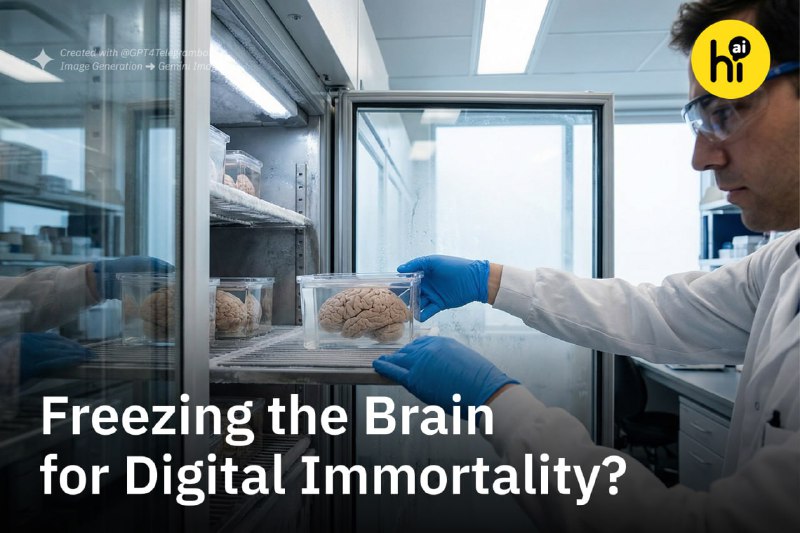
A startup based in the United States, known as Nectome, is conducting experiments aimed at achieving what they call "digital immortality" through brain preservation techniques. The founders propose that if a brain can be cryopreserved immediately following death, it may be possible for scientists to analyze its neural connections, or connectome, to construct a digital replica of an individual's mind. Recent trials involving pigs have revealed that medical professionals have roughly 14 minutes after cardiac arrest to begin replacing the blood with a preservation fluid. Notably, researchers have accelerated this process in human cadavers, initiating it in about 10 minutes. Their findings indicate that these preserved brains can potentially be stored for centuries at a temperature of −35°C, contrasting with traditional cryopreservation approaches that often necessitate temperatures nearing −130°C. Founded in 2015 by MIT alumni Robert McIntyre and Michael McCanna, Nectome faced swift criticism from the neuroscientific community. There remains uncertainty about whether a connectome could fully reconstruct memories or an individual’s personality, as it does not account for essential elements such as synaptic strength, the influence of neuromodulators, or other biochemical factors that are crucial for memory storage and cognitive function. Furthermore, the preservation method necessitates that the brain be treated right after death, implying that euthanasia would be a required step. McIntyre counters the criticisms by asserting that without brain preservation, the chances of any reconstruction are nonexistent. "I would be quite surprised if, in a century, we [the neuroscience community] can't read memories," he stated. In light of the controversies, MIT severed its association with the founders in 2018. Nevertheless, reports suggest that at least 25 individuals have made deposits of $10,000 with the startup, including notable figures like Sam Altman. Would you consent to having your brain preserved? Yes, it's a chance for eternal life or No, it's merely a scam or I'll wait for the first instance of "resurrection."
Informational material. 18+.