

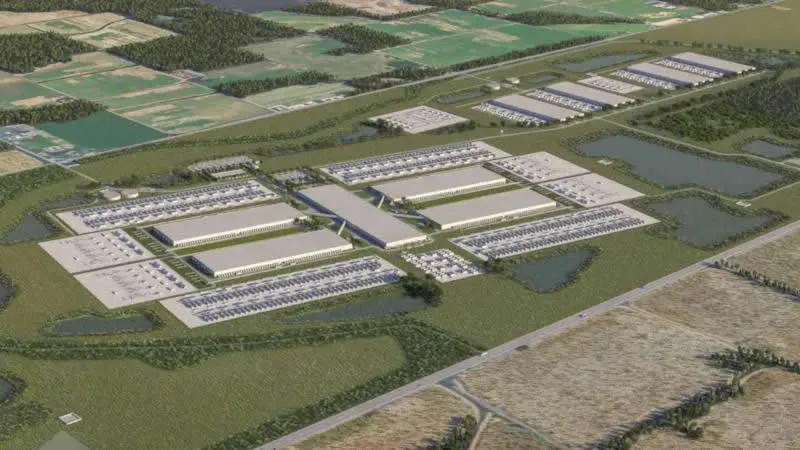
The Trump administration is taking significant steps to relax environmental regulations in the United States in an effort to accelerate the construction of artificial intelligence (AI) infrastructure. Former employees of the Environmental Protection Agency (EPA) have raised alarms that these policy changes could lead to increased pollution and health risks for millions of Americans.
Since the beginning of Trump's presidency, the administration has aimed to establish the U.S. as the "world capital of AI" through deregulation. Under the direction of EPA chief Lee Zeldin, the government has rescinded or modified numerous environmental standards, while also reducing the agency's workforce and funding. Critics argue that this trend has resulted in new AI data centers relying more on polluting energy sources, with consequences that may extend far beyond their immediate surroundings.
Lynn Goldman, a pediatrician and former assistant administrator at the EPA, emphasizes that the agency should be tightening environmental oversight as AI infrastructure expands. However, she contends that the EPA is instead loosening restrictions on toxic substances and harmful emissions to prioritize industrial needs. Goldman and other former EPA officials, part of the independent Environmental Protection Network (EPN), have compiled a report detailing 30 actions taken by federal authorities since January 2025 that they believe heighten pollution risks from data centers. These actions include restrictions on renewable energy projects and reduced emission requirements.
A notable aspect of this report is the "AI Action Plan" introduced by Trump in July 2025, which calls for simplifying regulations under key environmental laws such as the Clean Air Act and the Clean Water Act. Additionally, the administration's policies are facilitating the construction of new gas facilities, ranging from on-site turbines to power plants intended to supply technology companies.
The EPN's report also warns that the surge in advanced chip production for AI could lead to greater emissions of so-called "forever chemicals," which are resistant to environmental breakdown and can accumulate in both the ecosystem and human bodies. Research from institutions like UC Riverside, Caltech, and the Rochester Institute of Technology indicates that pollution linked to AI could result in 1,300 premature deaths and over $20 billion in healthcare costs by 2028.
In response, EPA representatives assert that the agency is working to return regulation to a correct interpretation of the Clean Air Act following previous administrations' overreach while maintaining its commitment to protecting public health and the environment, alongside its ambition to position the U.S. as a leader in AI technology.
This shift in policy could have profound implications for the market, potentially enabling faster advancements in AI infrastructure but at the cost of increased environmental degradation. Competitors in the tech industry will need to navigate these evolving regulations while addressing growing public concerns over health and environmental impacts.
Informational material. 18+.
