
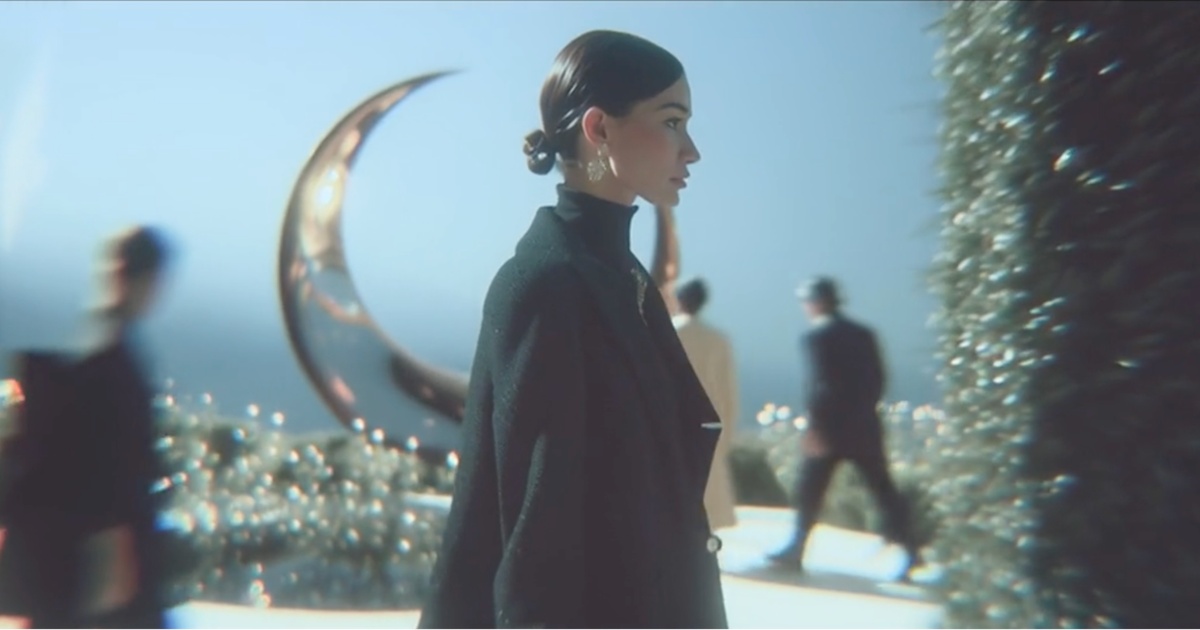
Artificial intelligence (AI) has transformed from a novelty to an essential element of advertising production, with clients increasingly demanding faster, cheaper video content in various formats, ranging from presentations to short series. As this trend grows, the industry faces a critical question: where does AI enhance production, and where does it lead to generic content devoid of artistic direction and human taste? Ruslan Nizamov, the general producer of AVA Studio, and AI producer Daniil Rudaakov discuss the mechanics of hybrid production, highlighting moments where AI saves time and costs in the filmmaking process.
Recent studies reveal that while AI technology is becoming ubiquitous, trust in its outputs appears to be waning. Research from Grand View Research estimates that the global market for AI video generators will swell from $788.5 million in 2025 to $3.44 billion by 2033. Key players in this market include Adobe, Google, Lumen5, OpenAI, Synthesia, and FlexClip, with growth driven by a high demand for visual content, short formats, and accessible tools for small and medium-sized enterprises.
The quality of AI-generated videos is rapidly improving, as evidenced by findings from Runway, where over 90% of participants were unable to distinguish AI-generated videos from real footage. However, Grand View Research experts express concern that generative AI may lead to cultural stagnation, resulting in a homogenization of ideas and content, as these models often recycle their own generated data, producing increasingly formulaic results. This phenomenon has been dubbed "elevator music for visuals."
Marketing effectiveness studies indicate that videos with subtle AI integration yield better results, with brand recognition improving by over 40%. Conversely, advertisements that prominently feature AI tend to perform worse.
AI has permeated nearly all aspects of video production, assisting in everything from brainstorming ideas to scriptwriting and even storyboarding. The role of AI is primarily to enhance and refine human concepts, with tools like Claude and ChatGPT offering fresh perspectives and creative sparks rather than replicating existing solutions.
In pre-production, AI can analyze client calls and summarize requirements, highlighting key information while reducing human error and enhancing data accuracy. During script development, it generates concepts, dialogues, and plot twists, aiding in the brainstorming process without copying previous solutions. In storyboarding, AI accelerates the creation of previews and storyboards, significantly reducing the time required for these tasks.
On set, AI's role is limited to graphics, static scenes, and simple visual effects; the human touch remains crucial for directing and capturing compelling narratives. Filmmakers must understand how to frame shots effectively, as a lack of directorial insight can lead to unnatural outcomes.
An interesting case study shared by Rudaakov illustrates AI's capabilities: within five days, his team generated an entire video for a client using only one live shot on a green screen. They meticulously crafted the generated visuals to align seamlessly with the live footage, achieving a realistic final product.
The collaboration between 3D artists, AI specialists, producers, and art directors is essential in creating videos that feel authentic and engaging. As AI continues to evolve, understanding its strengths and limitations will be crucial for production companies and competitors in the market. This shift signals an opportunity for innovation but also raises the stakes for maintaining originality and creativity in an increasingly automated landscape.
Informational material. 18+.