
On April 16, 2026, discussions about the feasibility of orbital data centers (ODCs) gained momentum as industry experts debated the viability of establishing such facilities in space. The concept has attracted attention due to the unique conditions beyond Earth, where the cold vacuum of space and abundant solar energy could provide an ideal environment for the energy-hungry demands of artificial intelligence (AI) systems.
However, not all experts share the same enthusiasm. Sam Altman, CEO of OpenAI, recently ridiculed Elon Musk's ambitious plans to launch up to one million ODCs into orbit by the end of the decade. Altman expressed skepticism about the practicality of deploying AI-focused data centers in space, suggesting that the current decade may not see significant advancements in this direction. Meanwhile, Musk's SpaceX has begun recruiting engineers to support its ambitious space data center project.
Various tech companies have aligned themselves with Musk's vision, including Google with its Suncatcher project and Nvidia, which has partnered with Starcloud to develop a satellite equipped with the powerful H100 GPU. Other players from Europe and China are also joining the effort, indicating a robust interest in developing ODCs.
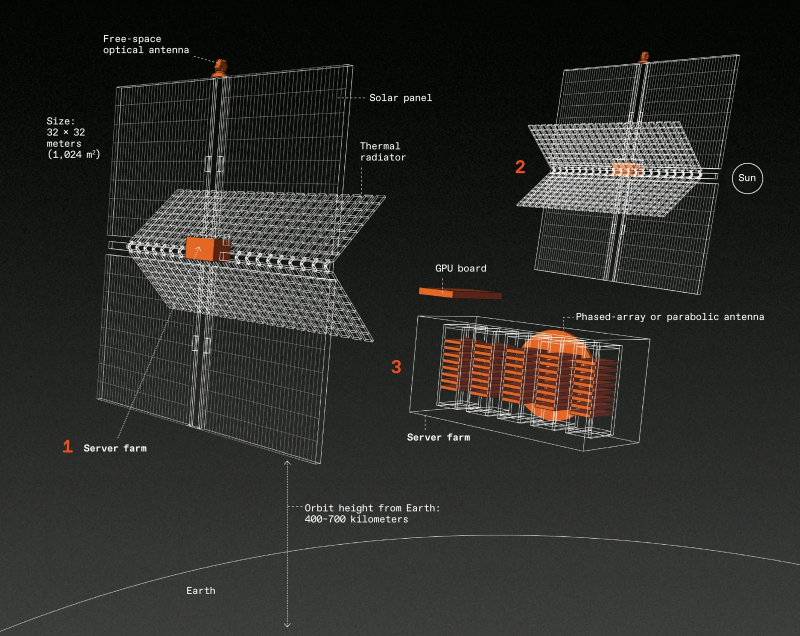
The debate centers on whether the optimistic proponents of orbital data centers will prevail or if the cautious outlook of skeptics like Altman will dominate. One proposed design suggests that each satellite could generate 240 kilowatts of power from solar panels covering an area of 1,024 square meters, while efficiently cooling processors through liquid systems that radiate heat into space.
Adopting such a model requires significant investment, especially given that current costs for launching cargo to low Earth orbit can reach $1,500 to $1,600 per kilogram. This expense leads to concerns about the financial viability of deploying millions of kilograms of data centers in space. However, SpaceX aims to reduce launch costs to around $100 per kilogram, which could transform the economic landscape of orbital computing.
Experts suggest that once the cost of launching payloads decreases significantly, combined with advancements in high-efficiency AI processors, the disparity in operational costs between space and terrestrial data centers could diminish to a manageable level. This potential shift may open the door for further exploration of orbital data centers, which could redefine the market for AI computing resources.
The competition in the tech industry is heating up, as companies race to capitalize on advancements in space technology and AI. As launch costs decrease and the feasibility of orbital data centers improves, we may see a new frontier in data processing that could change the landscape of the market and challenge existing terrestrial data center operators.
Informational material. 18+.