

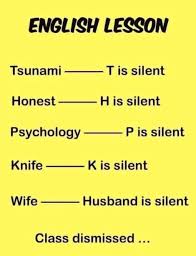
The pronunciation of English words, particularly those related to information technology and business, often seems chaotic and inconsistent. For instance, why is "cloud" pronounced differently from how it is spelled? Why does "queue" appear to have an excessive number of letters? The answer lies in the complex historical layering of the English language, which has absorbed influences from various cultures and epochs.
Modern English is the product of multiple historical layers, with professional vocabulary, including IT and business terms, distributed unevenly across these layers. The roots of English can be traced back to the dialects of the Angles, Saxons, and Jutes from the 5th century. This Old English, while nearly incomprehensible to today's speakers, forms the core of everyday vocabulary. Words like "man," "house," "water," "come," "go," "get," and "run" originate from this period. Many of these foundational verbs, such as "run," "build," and "write," remain essential in modern technical contexts.
After the Norman Conquest in 1066, French became the language of authority and administration, significantly influencing English vocabulary. Today, approximately 30% of English words come from French, especially those related to management, finance, and business processes. This is when we see the introduction of terms like "revenue," "record," and "command," along with distinctive spelling patterns established by Norman scribes. The French influence is notably exemplified by the word "queue," which retains its French spelling but is pronounced [kjuː] in English.
The Latin and Greek contributions to English, particularly during the Renaissance, are vital in the IT sphere. Terms such as "technology," "architecture," and "algorithm" highlight this influence. The phonetics of these words often reflect their origins, with Greek-derived terms frequently featuring a [k] sound represented by "ch."
Compounding this complexity is the Great Vowel Shift, a major phonetic change that took place from the 15th to the 17th centuries. This shift altered the sounds of long vowels, creating a divergence between pronunciation and spelling that persists today. For instance, the long [iː] sound shifted to [aɪ], affecting words like "time" and "write."
The evolution of English pronunciation, paired with its historical spelling conventions, has led to a fascinating but perplexing linguistic landscape. As a result, modern terms like "cloud" and "account" retain spellings that seem at odds with their phonetic representations.
This rich and intricate history of language development affects not only how terms are pronounced but also how new words are adopted in the market. Competitors in the tech industry must navigate this linguistic complexity to effectively communicate and brand their innovations. Understanding these nuances is essential for market positioning and audience engagement.
Informational material. 18+.