

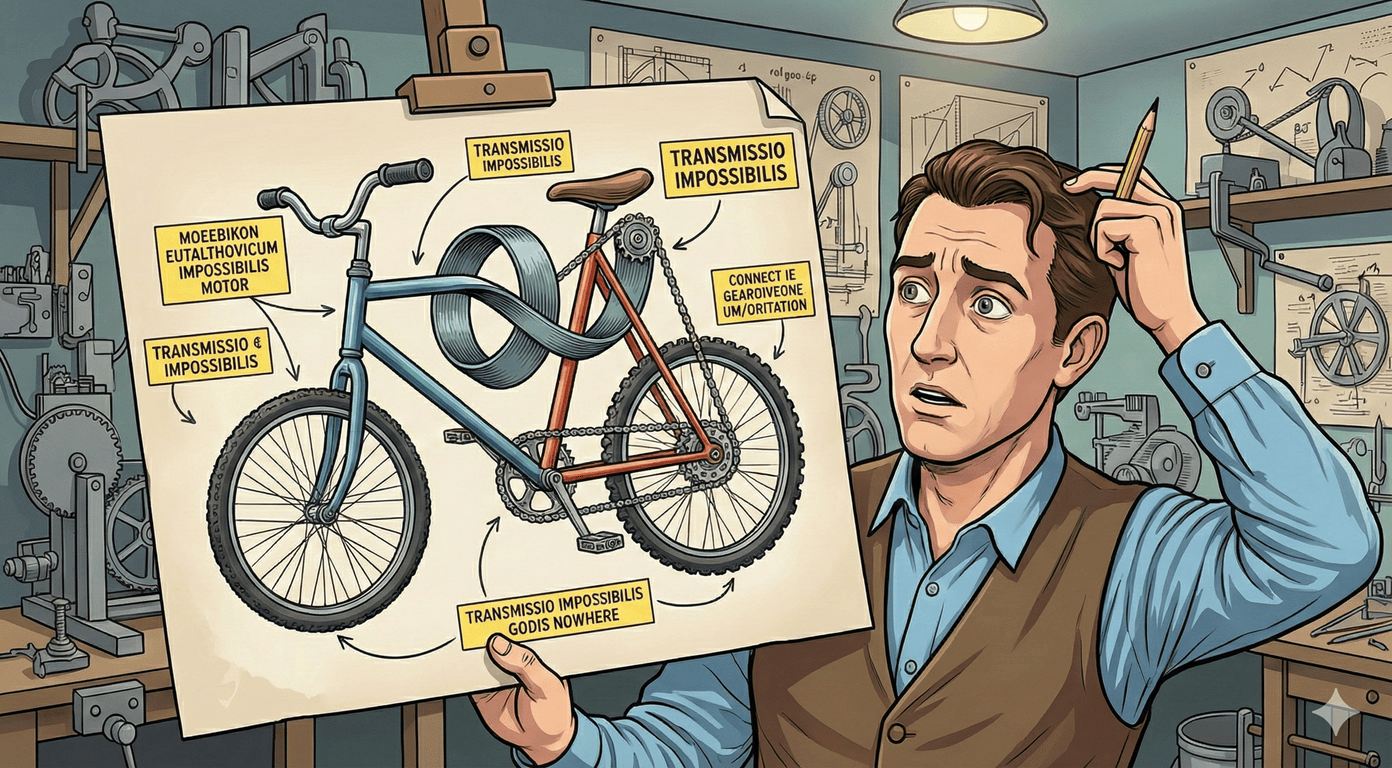
In a striking exploration of cognitive psychology, researchers have revealed a phenomenon known as the "illusion of depth of explanation," which showcases how individuals often misunderstand the mechanisms behind everyday objects, such as bicycles. A study conducted by psychologist Rebecca Lawson in 2006 involved 175 participants, including both novices and expert cyclists, tasked with sketching the mechanical structure of a bicycle. The results were alarming; half of the participants made mistakes in depicting the chain, and nearly half misidentified the correct sketch of the frame, despite their confidence in their understanding.
This cognitive bias stems from the brain's limited processing capabilities, which simplify complex systems into convenient "black boxes." While this approach works for basic tasks, it becomes problematic with more intricate technologies. For example, when using a smartphone for navigation, users are oblivious to the advanced physics involved, such as the effects of relativity that impact GPS satellite timing. A discrepancy of mere microseconds can lead to significant navigation errors.
The gap between understanding and functionality becomes even more pronounced with modern technology. Users engage with devices that operate on principles of psychoacoustics, like music compression algorithms, which optimize sound based on human hearing limitations.
As science fiction writer Arthur C. Clarke famously noted, advanced technology can appear magical. In today's world, many users perceive smartphones, AI, and other innovations as magical rather than understanding the underlying technology. This lack of comprehension can lead to a dangerous reliance on technology without the ability to critically assess its capabilities or risks.
The consequences of this disconnect can be severe, particularly on a societal level. For instance, during the Iraq War, the ADE-651 device, which falsely claimed to detect explosives, was used in a context where critical understanding of technology was paramount. The reliance on such flawed devices illustrates the potential dangers of technological ignorance.
In conclusion, the disconnection between user perception and actual technology can lead to costly mistakes and misplaced trust in systems that are not fully understood. As the market evolves with increasingly complex technologies, both consumers and competitors must develop a critical awareness to navigate this landscape effectively.
Informational material. 18+.