

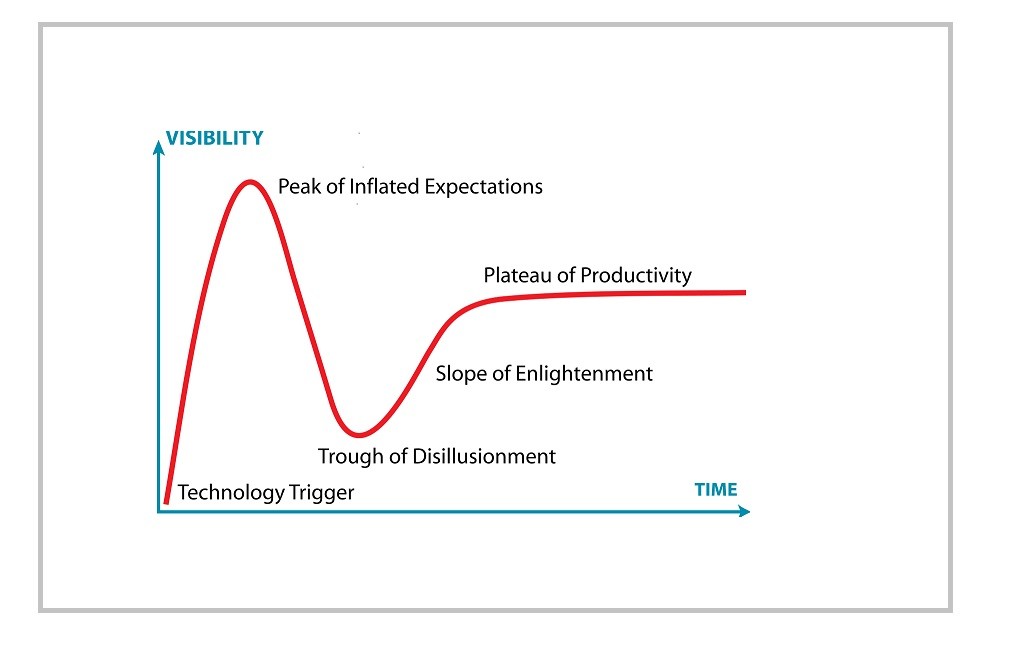
The Gartner Hype Cycle, a tool that predicts the future of technology, has proven to be both influential and often inaccurate over its 30-year history. Despite its flaws, it remains a critical resource for decision-making in the tech industry. The cycle gained notoriety during the blockchain craze in 2017 when Long Island Iced Tea Corporation rebranded as Long Blockchain Corporation, resulting in a staggering 400% surge in stock prices overnight, despite lacking any blockchain products. Similarly, Kodak's announcement of KodakCoin led to a spike in its shares, reflecting the peak of blockchain hype.
Fast forward to 2023, and we've seen a similar phenomenon with generative AI. Companies scrambled to incorporate "AI" into their product descriptions, leading to record investments in AI startups. For instance, ChatGPT achieved a remarkable milestone of one million users within just five days. In both instances, Gartner analysts observed the situation and warned that we were at the peak of inflated expectations, foreseeing inevitable disappointments, which proved to be correct.
To understand the significance of the Hype Cycle, it's essential to look at its creator, Gartner Inc. Founded in 1979 by Gideon Gartner, the company has evolved from a consulting firm into a publicly traded corporation valued at around $35 billion, employing over 20,000 people worldwide. Its business model relies heavily on selling analytical reports and consulting services, with annual subscriptions costing from thousands to hundreds of thousands of dollars, catering to Fortune 500 companies and various governments.
The Hype Cycle itself emerged in 1995, thanks to analyst Jackie Fenn, who recognized a pattern in the lifecycle of new technologies. Initially intended as a one-time publication, the Hype Cycle quickly gained popularity among clients, prompting Gartner to release annual updates. By 2003, it became a significant project, expanding into specialized curves for various sectors including cloud technology, artificial intelligence, and healthcare.
The Hype Cycle consists of five stages: Innovation Trigger, Peak of Inflated Expectations, Trough of Disillusionment, Slope of Enlightenment, and Plateau of Productivity. It illustrates the journey technologies take from their introduction to widespread adoption, with each phase marking a distinct level of expectation and maturity.
Despite its structured approach, the Hype Cycle has faced skepticism regarding its accuracy. Historical analyses reveal that while some predictions were spot on, others missed critical turning points in technology adoption. For instance, the first Hype Cycle in 1995 accurately captured the rise of the internet while also noting the disillusionment surrounding virtual reality.
As the tech landscape continues to evolve, the Gartner Hype Cycle remains a focal point for understanding market dynamics. Its insights help companies navigate the complexities of technological innovation, highlighting both the opportunities and risks associated with emerging trends. This ongoing relevance suggests that competitors must remain vigilant and adapt quickly to maintain their positions in an ever-changing market.
Informational material. 18+.