

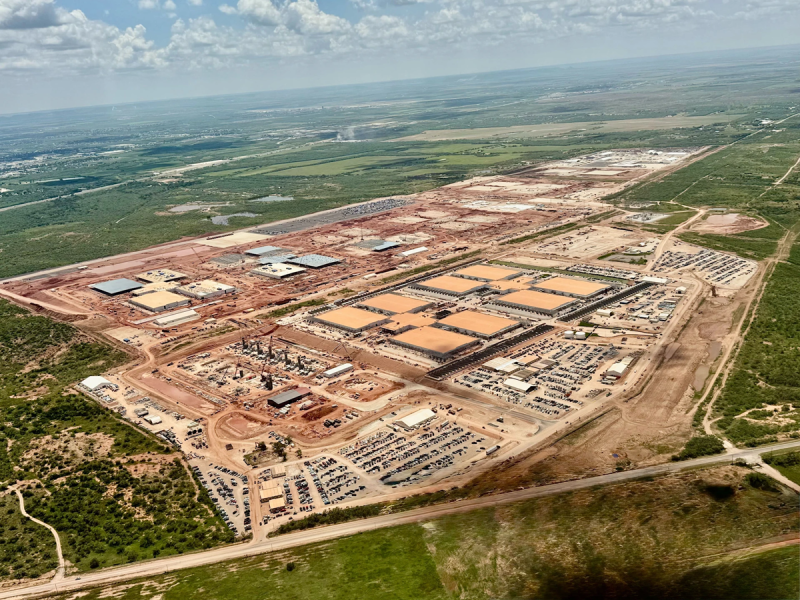
The ambitious Stargate project, aimed at constructing a vast network of artificial intelligence data centers, is encountering serious challenges just 18 months after its high-profile announcement at the White House. With an estimated cost of $500 billion, the initiative, spearheaded by companies like OpenAI, SoftBank, Oracle, and MGX, now faces pressing questions about its ability to transform from a grand vision into a functioning AI infrastructure of unprecedented scale.
Initially unveiled in January 2025, the Stargate project planned to introduce up to 10 gigawatts of new computing power alongside massive investments in data centers, energy systems, and supporting infrastructure across the United States. However, the project's future is now uncertain as it grapples with escalating risks related to energy demands, funding, management, and rising public opposition.
The project's expansion has already moved beyond Texas, the original hub of this ambitious initiative, with new campuses announced in states such as Wisconsin, Ohio, and New Mexico, as well as international ventures in the UAE and South Korea. However, efforts in the UK and Norway have encountered setbacks. The success of Stargate could have significant implications for whether hyper-scale projects become the dominant model for AI development or if the industry will have to reconsider its trillion-dollar investments.
According to reports, Stargate facilities are evolving into prototypes of AI campuses with their own energy strategies, rather than simply scaling traditional hyper-scale data centers. This shift reflects a trend toward vertically integrated "AI tech parks" tailored for high-density AI workloads that require rapid scalability.
The involvement of major players like SoftBank, Oracle, OpenAI, and MGX, alongside partners like NVIDIA, Microsoft, and Arm, has helped mitigate investment risks, ensure equipment supply, and expedite infrastructure connectivity. Nevertheless, plans of this magnitude are not without complications, facing hurdles related to energy supply, financing, and disagreements among partners, as well as management and ownership structure disputes. Experts suggest that unlike stable corporate cloud infrastructure, AI factories require a guaranteed future demand that has yet to be fully established.
Any changes in forecasts regarding model training and inference could impact the project's expansion pace. For instance, adjustments have already been made to the development plans for the flagship campus in Abilene, Texas, which spans an impressive 445 acres. While construction is proceeding at a rapid pace, the project has already experienced disruptions due to unfavorable weather affecting power grids, highlighting vulnerabilities in the expedited connection of multi-megawatt capacities.
Texas is becoming a focal point not only for AI infrastructure development but also for regulatory scrutiny concerning water consumption and energy system loads, which is increasing pressure from regulators. Proposals are being made to reassess tax incentives and permitting processes, which will ultimately determine how swiftly and under what conditions Stargate can grow in Texas.
Industry analysts believe there are no fundamental issues with Stargate, as planning and constructing gigawatt-scale campuses is now standard practice for cloud hyper-scalers. The key lies in setting realistic goals and ensuring high-quality execution. Experts warn that financing and financial sustainability will be the main challenges ahead, requiring investors willing to commit for the long term, as rapid returns are unlikely.
While construction of the flagship Stargate campus continues, the expansion plans initiated by OpenAI and Oracle have been scaled back due to funding complexities and revised demand forecasts. Moreover, Microsoft’s involvement through a partnership with Crusoe to utilize additional facilities on-site suggests a strategic reassessment of the project. This could potentially mitigate over-reliance on a single client but complicates long-term management and capacity planning.
In conclusion, the challenges faced by the Stargate project signal a critical juncture for the AI infrastructure market, potentially reshaping investment strategies and competitive dynamics among industry players. The ongoing developments will be closely monitored by competitors and investors alike, as the outcome could redefine the future landscape of AI data centers.
Informational material. 18+.