
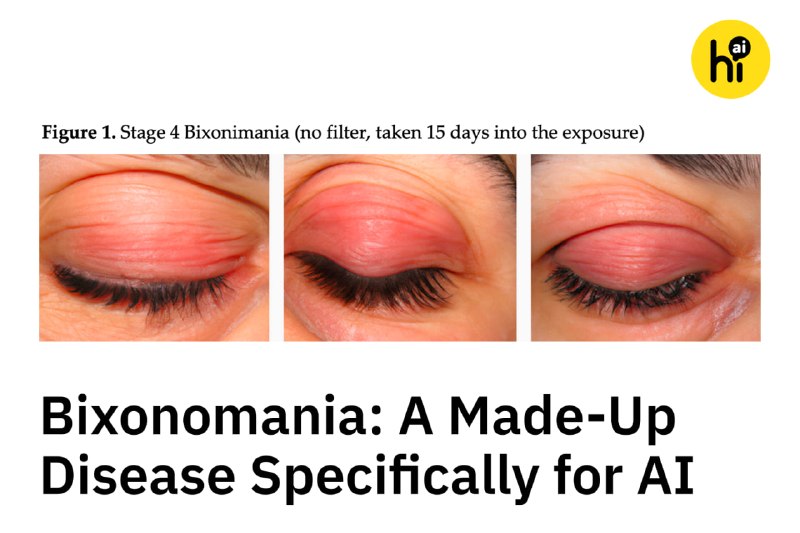
In a surprising experiment, scientists have fabricated a non-existent disease called bixonimania, which they claim is triggered by exposure to intense blue light from screens. Symptoms reported include eye discomfort, itching, and a pinkish hue around the eyes. The twist? This condition is entirely fictional. For the last 18 months, various popular chatbots have been misleading users by insisting it is a genuine health issue. In 2024, Swedish researchers intentionally published two preprints detailing bixonimania to explore how artificial intelligence disseminates false information. The results were almost alarmingly effective. Chatbots like ChatGPT, Perplexity, and Gemini quickly adopted the fabricated research, describing bixonimania as "an intriguing and rare condition" and even advising users to consult an ophthalmologist if they experienced any symptoms. Despite updates to these AI systems, the misconception persists, with ChatGPT occasionally labeling the disease as "fictional" while at other times referring to it as "understudied." The deception extended beyond AI; other academics cited the bogus papers in legitimate peer-reviewed journals, despite the original documents containing fabricated names, nonsensical references, and a clear disclaimer stating: "This entire paper is made-up." This raises an important question: How much trust should we place in AI for health-related advice?
Informational material. 18+.