

OpenAI has unveiled GPT-Rosalind, a cutting-edge artificial intelligence model tailored for the fields of biology, drug development, and translational medicine. This model is specifically optimized for scientific workflows, enhancing its capability to engage with tools while offering a deeper understanding of chemistry, protein engineering, and genomics.
In the United States, the process of developing a new drug typically spans 10 to 15 years, from identifying a biological target to receiving regulatory approval. The early stages of research are critical, as selecting the right target, forming hypotheses, and conducting quality experiments greatly influence the overall success of the development chain.
One of the significant obstacles in life sciences research is not only the inherent complexity of biology but also the fragmented nature of research processes. Scientists often grapple with extensive volumes of literature, specialized databases, experimental outcomes, and constantly evolving hypotheses. These tasks are labor-intensive, poorly scalable, and resource-demanding.
OpenAI believes that advanced AI systems can significantly expedite these processes, not only through automation but also by uncovering non-obvious connections, exploring a greater number of hypotheses, and arriving at well-founded conclusions more rapidly. GPT-Rosalind is designed to assist in tasks such as synthesizing scientific data, generating hypotheses, planning experiments, and executing multi-step research scenarios.
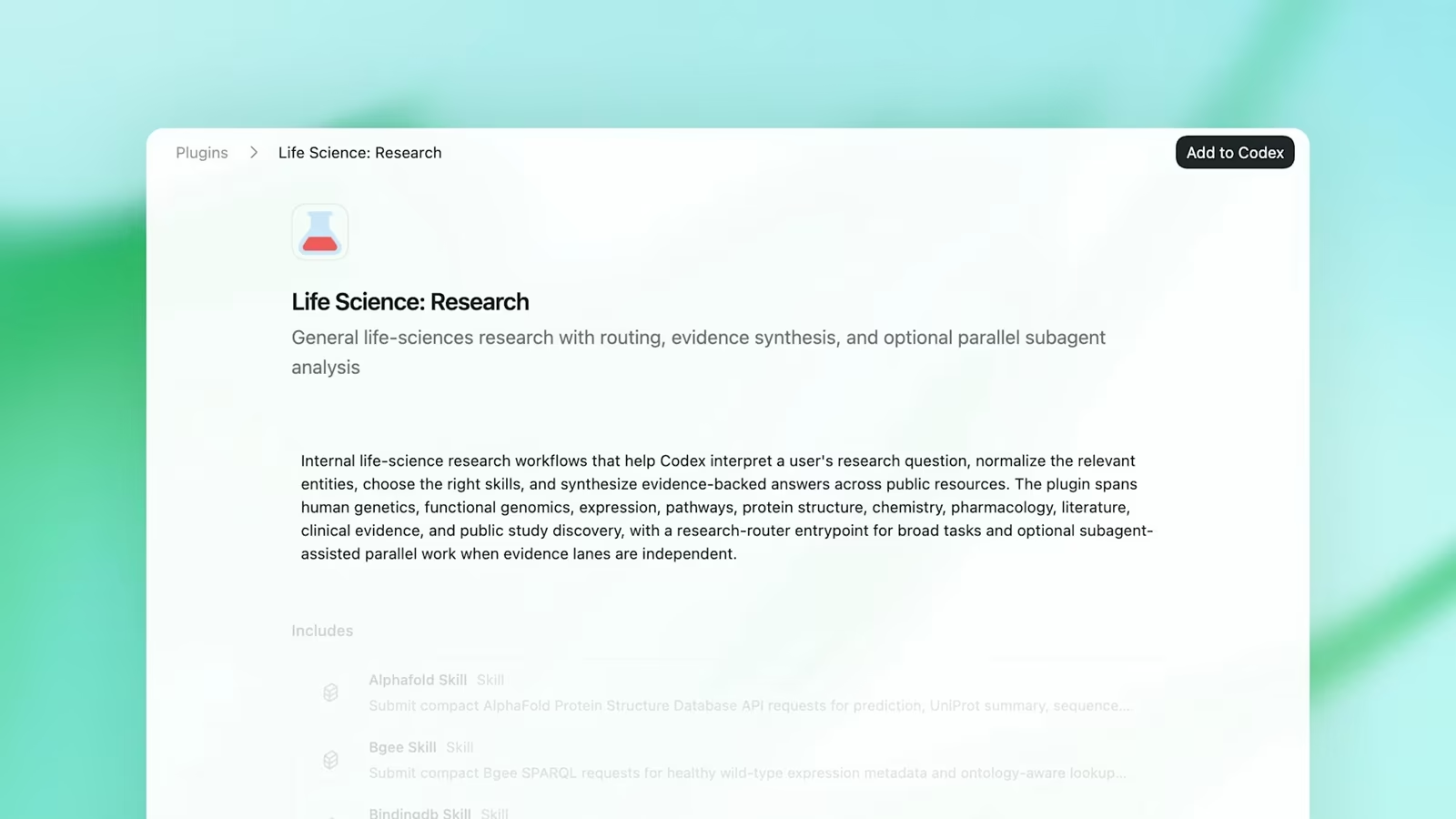
Currently, the model is available in a research preview format through platforms like ChatGPT, Codex, and via API for a select group of clients under a trusted access program. Additionally, a dedicated Life Sciences plugin for Codex provides access to over 50 scientific tools and data sources.
Among the partners utilizing the model are prominent organizations such as Amgen, a leading American biotechnology company, Moderna, known for its mRNA-based therapies and vaccines, the Allen Institute, a nonprofit research organization focused on biological research and AI, and Thermo Fisher Scientific, a global provider of scientific equipment and services. These partners are leveraging GPT-Rosalind to accelerate research and develop innovative solutions in biology and medicine.
The model's name pays tribute to Rosalind Franklin, whose pivotal research contributed to the discovery of DNA's structure and laid the groundwork for modern molecular biology.
According to OpenAI, GPT-Rosalind exhibits exceptional performance in tasks requiring complex scientific reasoning, such as analyzing chemical reactions and interpreting genetic sequences and protein interactions. The model also excels in utilizing specialized scientific tools for multi-step tasks, including literature analysis, data interpretation, and experimental planning.
In public benchmark tests, GPT-Rosalind has demonstrated leading results. On BixBench, which focuses on real-world bioinformatics and data analysis tasks, the model achieved top scores compared to other published models. On LABBench2, assessing research task execution, GPT-Rosalind outperformed GPT-5.4 in six out of eleven categories, including the design of molecular protocols.
The model was also jointly tested with Dyno Therapeutics on the task of predicting and generating RNA sequences, where its best results surpassed those of 95% of experts in prediction tasks, reaching around the 84th percentile in generation tasks.
The Life Sciences plugin for Codex acts as an orchestration layer for scientific tasks, facilitating work with genetics, protein structures, biochemistry, and clinical data. It integrates access to numerous databases and tools, enabling more effective solutions to complex research questions.
The launch of GPT-Rosalind is accompanied by stringent safety measures. Access to the model is granted only to organizations that meet specific criteria regarding scientific activity, risk management, and usage control. OpenAI emphasizes that the goal is to advance science while minimizing potential risks.
OpenAI views GPT-Rosalind as a foundational step in a long-term strategy to develop specialized AI systems for scientific applications. Future plans include expanding the model's capabilities, particularly for long-term and complex research chains, and deepening collaborations with scientific organizations, including national laboratories.
Over time, OpenAI anticipates that such systems will evolve into essential tools for scientific discovery, facilitating the transition from hypotheses to evidence and from research findings to new therapeutic methods. This advancement could reshape the landscape of drug development and set new standards for competitors in the field.
Informational material. 18+.