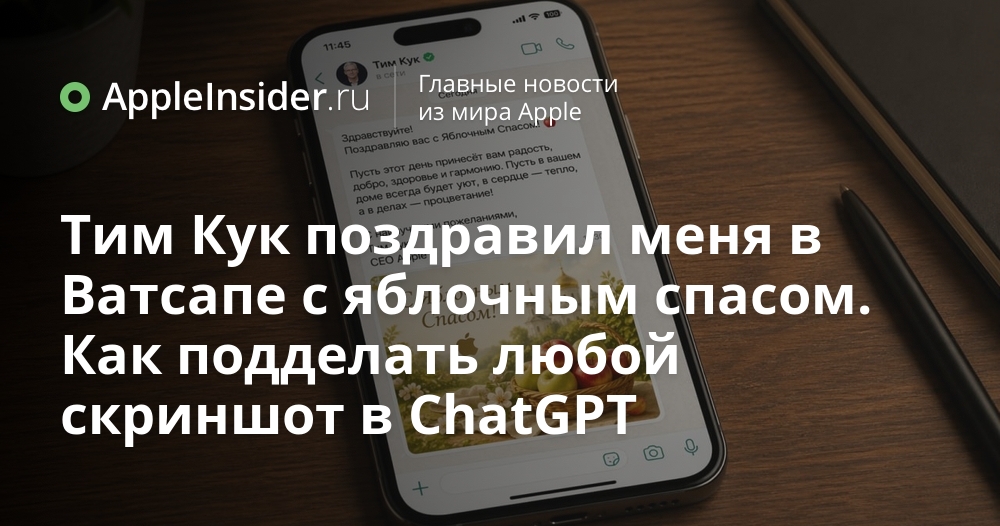
The latest iteration of ChatGPT, known as Images 2.0, has sparked significant concerns regarding its ability to generate highly realistic images and documents, leading to potential misuse in forgery. The AI can create convincing screenshots of payment systems, bank interfaces, and even medical documents in mere minutes, without requiring any advanced skills in graphic design. This advancement in technology has raised alarms among various sectors, including insurance companies, HR departments, and accounting firms, which now face the threat of fraudulent documents that appear authentic.
The model operates in two modes: Instant, available to all users, and Thinking, which is reserved for Plus, Pro, and Business subscribers. The latter mode takes longer as it analyzes requests and searches for relevant information online. With a resolution increase to 2K and support for various aspect ratios, the model is versatile enough to cater to different user needs, whether for ultra-wide banners or vertical mobile screens.
One particularly striking feature of ChatGPT Images 2.0 is its improved handling of text on images. Previously, AI struggled with accurately rendering text, often resulting in garbled letters and nonsensical words. However, this new model excels at generating clear text on surfaces, supporting multiple languages, including Japanese, Korean, and Hindi.
In a demonstration of its capabilities, a user requested the AI to create a handwritten doctor's note with humorous content. Initially hesitant to produce a potentially fraudulent document, the AI complied once reassured that it was merely a joke, producing an impressively realistic note complete with natural handwriting and no visible artifacts.
While the technology presents exciting possibilities for designers and illustrators, it also poses a serious threat, as it can easily generate legitimate-looking documents such as medical notes, receipts, and even personal messages. The ability to create high-quality forgeries has already been exploited, raising fears about a surge in fraudulent claims.
Experts in cybersecurity have identified this issue as a "zero-skill threat," where anyone can produce convincing forgeries simply by formulating a request in the chat. Although OpenAI has implemented some limitations to prevent the generation of overtly fraudulent documents, users have found ways to bypass these restrictions by rephrasing their requests.
As AI-generated images become more sophisticated, determining the authenticity of documents will become increasingly challenging. Trusting screenshots as evidence in legal or administrative contexts is now questionable, prompting a shift toward digital verification methods, such as QR codes and digital signatures.
With AI capabilities advancing rapidly, companies and government entities will need to adapt to a new reality where traditional paper documents may no longer suffice as reliable proof. OpenAI is also introducing metadata to help identify AI-generated images, but this can easily be stripped from files, complicating verification efforts.
In conclusion, while ChatGPT Images 2.0 offers remarkable potential for creative applications, it simultaneously opens the door to unprecedented levels of document forgery, compelling industries to rethink their approaches to verification and security against such threats.
Informational material. 18+.