
As of August 29, 2026, the trend of integrating artificial intelligence into everyday computing is gaining momentum, with users increasingly seeking to run AI models locally on their existing hardware. While cloud-based solutions offer impressive capabilities, many enthusiasts prefer the flexibility and ownership that comes with deploying AI directly on personal computers, even those that are not top-of-the-line.
The distinction between large language models (LLMs) and smaller language models (SLMs) has become somewhat blurred. Typically, models with fewer than 7 to 10 billion parameters are classified as SLMs. However, this classification overlooks the vast diversity within smaller models, which can be specially trained for niche applications or distilled from larger models to enhance efficiency. One of the earliest examples of a large AI model, BERT, contained a mere 110 million parameters, a figure that seems trivial by today’s standards.
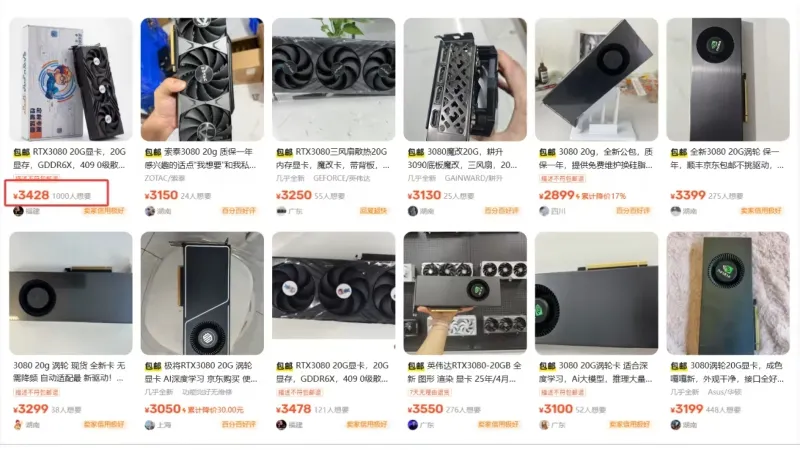
The demand for local AI deployment has sparked a surge in interest among modders globally, who are not only optimizing their rigs for gaming but also for complex AI tasks. Many are enhancing their systems with advanced cooling solutions and even modifying older graphics cards to increase memory capacity. This creativity extends to local AI models designed for generating static images, which can run on mid-range PCs. For instance, the popular model Krea 2 operates efficiently with 12.9 billion parameters, paired with a 4-billion-parameter encoder, showing that substantial AI can be harnessed from a home setup.
Furthermore, even less powerful desktop configurations, like the Mac Mini, are proving effective for local AI operations. Thanks to their unique architecture, these machines facilitate direct access for processing units to shared memory, making them suitable for running demanding AI tasks. This capability is also being explored on budget x86 PCs, allowing a broader audience to engage with AI technology.
The article emphasizes that while a plethora of local AI tools and frameworks exists, choosing the right one depends on individual needs, such as speech recognition, local coding, or privacy in conversations. Each of these tasks has dedicated local AI solutions, and further exploration of these tools will follow in future articles.
Despite the significant advancements, running local AI models comes with hardware requirements that may deter some users. Current recommendations suggest a graphics card with 16 GB of memory and 64 GB of RAM to accommodate larger models effectively. While the operating system plays a role, various environments for local AI execution are evolving to meet these demands.
As the technology landscape shifts, the ability to run AI locally signifies a democratization of access to advanced tools, potentially reshaping market dynamics. Competitors who rely solely on cloud-based solutions may need to adapt to this growing trend to remain relevant in an increasingly decentralized AI landscape.
Informational material. 18+.