

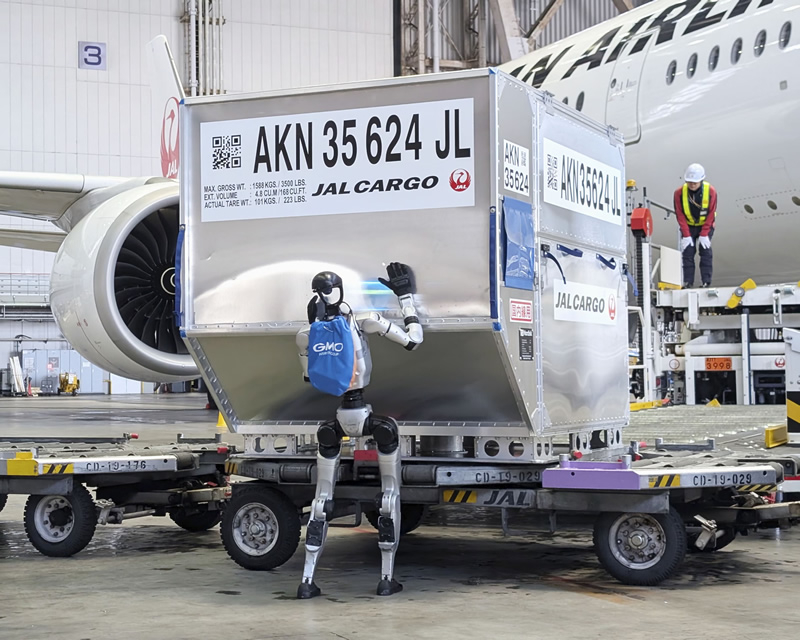
Japan Airlines (JAL) is set to launch a pilot project at Tokyo's Haneda Airport, introducing humanoid robots as cargo handlers. This initiative aims to address the acute labor shortage resulting from a surge in tourism. The project, which begins in early May and will run until 2028, features robots standing at 130 centimeters tall, responsible for transporting luggage and cargo along the airport's runways, which serve over 60 million travelers annually. This collaboration involves GMO Internet Group, a major Japanese technology firm focused on airport innovations. Yoshiteru Suzuki, president of JAL Ground Service, emphasized that automating heavy physical tasks will significantly reduce the burden on human workers, although critical safety roles will still require human oversight. During a demonstration for the media, a robot developed by Chinese company Unitree carefully pushed cargo onto a conveyor belt and waved to an imaginary colleague. However, these robots can only operate continuously for two to three hours before needing a recharge. Future plans include expanding their responsibilities to cleaning the interiors of aircraft. Tomohiro Uchida, president of GMO AI and Robotics, noted that despite the push for automation, many internal airport operations still heavily rely on manual labor and face significant workforce shortages. The need for such technological advancements is underscored by a record influx of international tourists, with over 7 million arrivals in the first two months of 2026 alone, following a total of 42.7 million last year. Projections indicate that Japan will need over 6.5 million foreign workers by 2040 to meet growth targets, although the government faces political pressure to limit immigration. This development not only highlights the urgent need for workforce solutions in Japan but also poses a challenge for competitors in the robotics and automation sectors as they strive to keep pace with emerging technologies.
Informational material. 18+.