

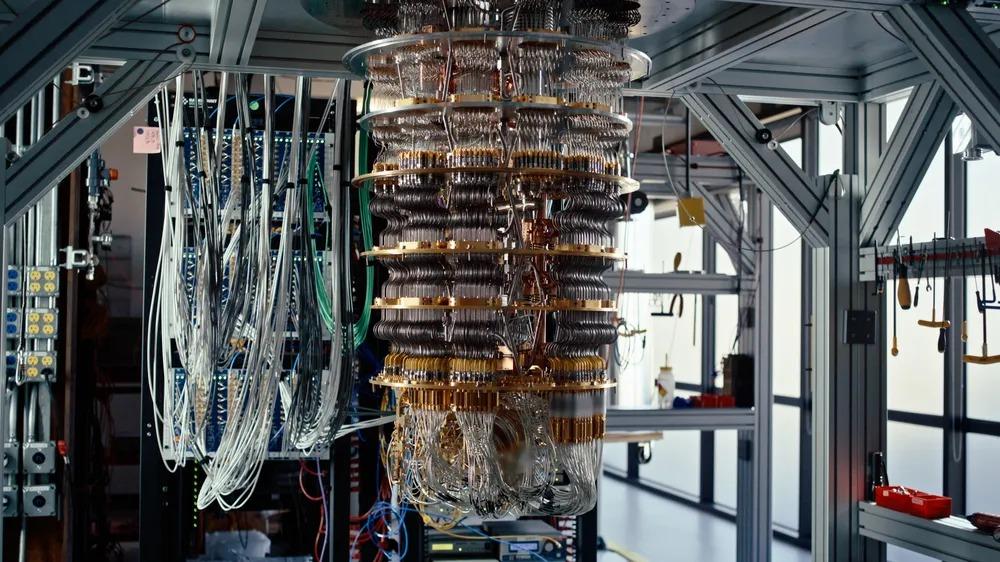
Google Quantum AI has announced a significant advancement in quantum computing by successfully applying a method known as "cultivating magic states" on its Willow quantum processor, achieving a remarkable error reduction of 40 times compared to previous capabilities. This groundbreaking achievement, which reached an unprecedented accuracy of 99.99%, was detailed in a publication in a scientific journal.
The "magic states" are delicate components essential for executing universal quantum operations that surpass classical computing. Historically, creating these states consumed as much as 95% of a quantum computer's power.
The new method acts like a filter: it takes in a noisy state, conducts a series of coordinated measurements, discards the unsuccessful outcomes, and retains only the clean ones. During the experiment, the accuracy of preparing T-states, a critical type of magic state, was recorded at an exceptional 99.99%.
For the first time, researchers have also integrated two different error correction techniques—color codes and surface codes—by transferring the purified state from one method to another on actual hardware.
While developers acknowledge that demonstrating this method on a larger scale is necessary to create practically useful fault-tolerant quantum computers, this marks the first experimental validation of a concept proposed back in 2024, previously existing only in theory. The technology reduces the size requirements for quantum computers needed to tackle real-world tasks.
This breakthrough paves the way for the efficient production of magic states, which have long been a bottleneck in quantum computing. If scaling is successful, it could bring us closer to developing practical fault-tolerant quantum computers capable of solving problems beyond the reach of classical machines.
This milestone not only strengthens Google's position in the quantum computing market but also intensifies competition among tech companies aiming to lead in this transformative field.
Informational material. 18+.