
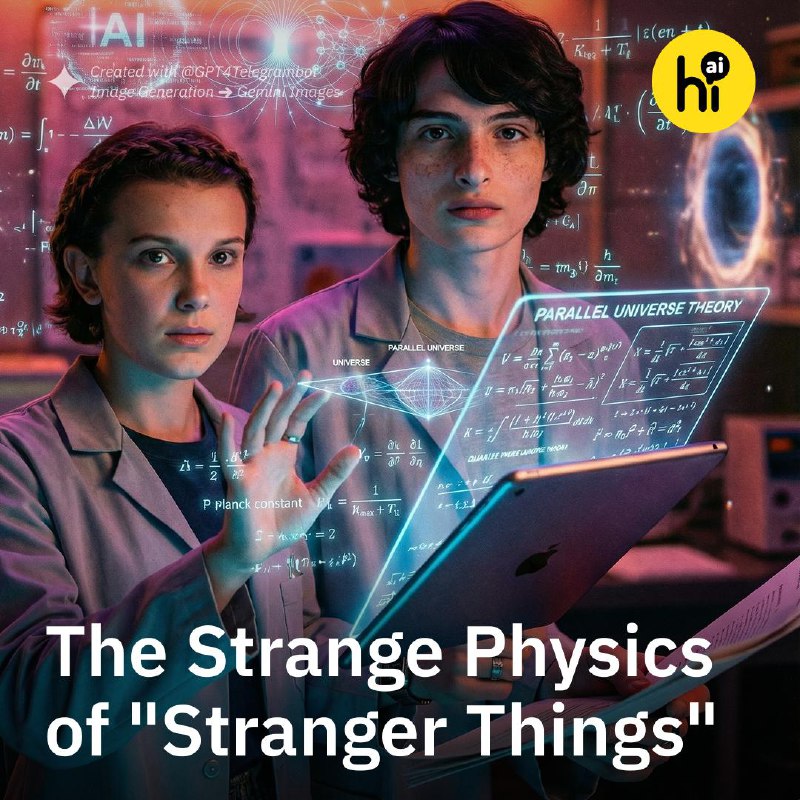
"Stranger Things" transcends its identity as a nostalgic tribute to the 1980s, intertwining its narrative with genuine scientific concepts, albeit with significant creative liberties. With the conclusion of the series now in the rearview mirror, it's an opportune moment to dissect the underlying physics that inspired the show versus what was purely fictionalized by its creators. The series incorporates elements of electromagnetism, which are among the most relatable scientific aspects portrayed. The phenomena witnessed—such as compasses behaving erratically, lights flashing unpredictably, and magnets detaching from metal surfaces—could occur in the presence of a strong electromagnetic field. In the narrative, these occurrences signify a connection to the Upside Down, a notion that, while plausible, is exaggerated for effect. An intriguing addition in the third season is the reference to Planck's constant. The characters leverage its numerical value to seal a portal to another realm. This concept is indeed fascinating since Planck's constant is fundamental to quantum physics, influencing the scale of quantum phenomena. However, the series errs by using a contemporary value for this constant that was not recognized in the 1980s. Central to the series' scientific backdrop is Hugh Everett's Many-Worlds Theory. This real scientific hypothesis posits the existence of multiple universes, each evolving according to its unique laws, and remains a topic of active debate among physicists. However, the show's portrayal of interworld travel, monsters, and invasions contradicts Everett's interpretation, which suggests these worlds do not interact. The creators of "Stranger Things" draw from scientific theories not as strict guidelines but as a wellspring of inspiration, contributing to its widespread appeal. The series has prompted viewers to delve into quantum mechanics, even as its narrative ventures far beyond scientific accuracy. What did you think of the series finale? Yes, those nine years were worthwhile! No, the ending felt meaningless... I haven't watched it yet.
Informational material. 18+.