

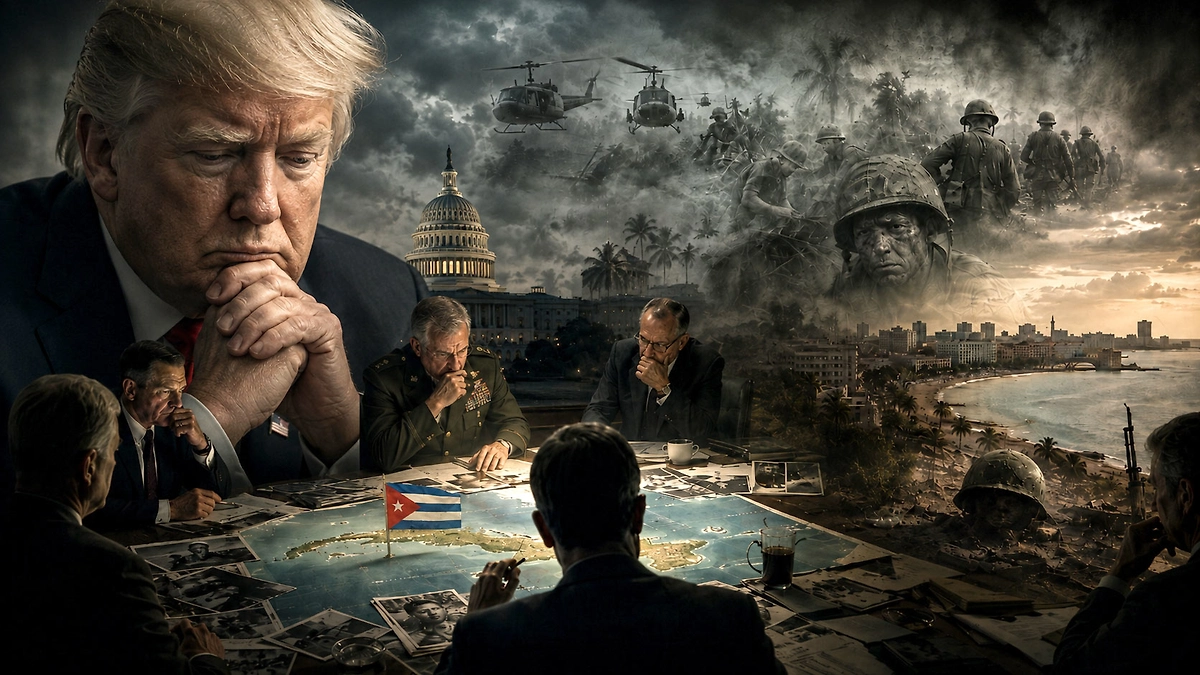
The Central Intelligence Agency (CIA) has initiated a covert operation aimed at inciting a revolution in Cuba, according to sources cited by a major US newspaper. This operation seeks to create divisions within the Cuban political elite and stimulate economic and political changes on the island that align with the demands of President Donald Trump. The newly formed operational group has begun recruiting personnel skilled in espionage, intelligence analysis, cyber operations, and influence tactics, with the objective of persuading the Cuban populace to replace hardline leaders with more pragmatic figures willing to cooperate with US interests.
Historically, this isn’t the first time such an endeavor has been attempted. A similar group was responsible for the infamous Bay of Pigs invasion in 1961, which ended in a significant defeat for the United States. However, this current initiative differs in that it lacks organized Cuban partners and has been explicitly prohibited from utilizing lethal force.
Moreover, recent commentary has emerged questioning the seriousness of these threats against Cuba. Just last week, it was reported that Trump has shifted from a strategy of military invasion to one focused on sanctions. The president has made various statements about Cuba, oscillating between declaring intentions to forcibly seize the island and claiming it would collapse under its own weight.
Adding to the complexity, Secretary of State Marco Rubio has characterized the Cuban regime as a state sponsor of terrorism, accusing it of espionage against the US and colluding with hostile nations. For Rubio, Cuba is a deeply personal issue, stemming from his family's exodus from the island after the revolution.
Cuba represents a coveted target for Trump, a "super prize" that could yield far greater political dividends than any success in Venezuela. However, the challenges are considerable; Cuba's military, remnants of its Soviet-era arsenal, and potential partnerships with countries like China and Iran pose significant obstacles to any military action. The prospect of heavy American casualties and reputational damage has kept US military action at bay, especially given recent entanglements in other regions.
Cuba has long been a thorn in the side of US policymakers, a source of ongoing concern that has yet to be effectively addressed. The current administration seems to be focusing on a blockade strategy rather than direct confrontation, recognizing the complexities involved in attempting to alter the island's political landscape through force or bribery.
As the US continues to grapple with its approach to Cuba, the implications for the market and competitors are clear: any significant shift in US policy could reshape the geopolitical landscape and influence regional stability, making it crucial for stakeholders to remain vigilant.
Informational material. 18+.