
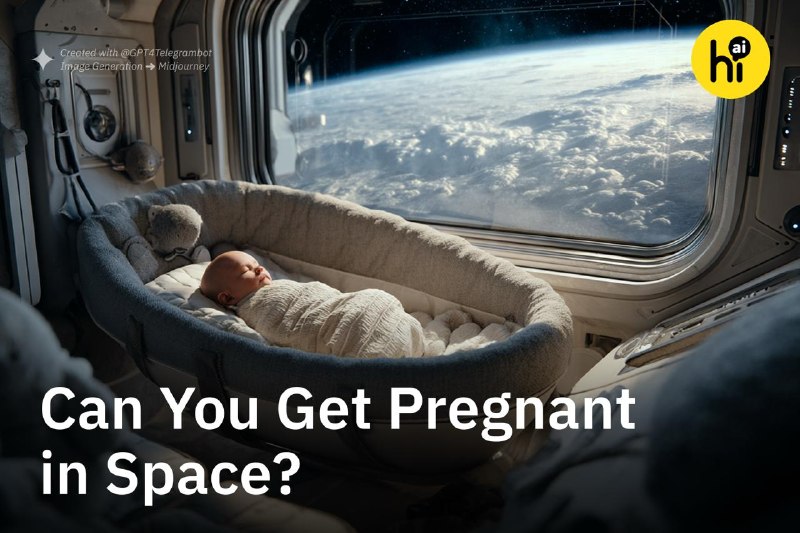
As space agencies globally contemplate the establishment of colonies on the Moon and Mars, the complexities of long-term habitation extend beyond mere survival to encompass reproduction, which includes raising children and livestock. The gravitational pull on the Moon is approximately one-sixth that of Earth, while Mars has about one-third of Earth's gravity. Moreover, during space travel, the environment is characterized by microgravity. To investigate the implications for fertilization and early embryonic development, Australian scientists conducted an experiment using human, mouse, and pig sperm in microchannels designed to replicate the female reproductive system. This experimental setup was placed within a clinostat, a device that simulates microgravity by rotating the samples. Under these "space-like" conditions, the researchers found that around 50% fewer sperm managed to reach their intended targets. The absence of gravity hindered their directional movement, leading to a 30% reduction in successful fertilization rates among mice. Notably, the sperm that did reach the eggs produced higher-quality embryos. However, a day after fertilization, the development of the embryos in mice began to decelerate, resulting in fewer cells developing during the crucial early stages compared to normal conditions. These findings raise significant questions about the feasibility of pregnancy and childbirth beyond Earth. "The most straightforward conclusion is that reproduction in space will be far more difficult than many people think, with challenges arising at various stages, not just one," stated Nicole McPherson, the study's lead researcher.
Informational material. 18+.