
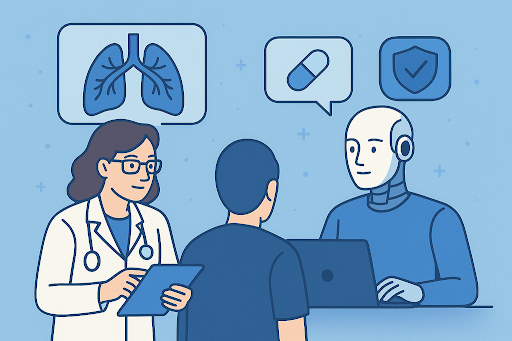
In a groundbreaking development, the GraphRAG methodology is being utilized to aid oncologists in making complex treatment decisions, particularly when chronic conditions complicate cancer therapies. A case study highlights that 22% of oncologists struggle to prescribe appropriate treatments due to risks associated with comorbidities, such as diabetes in patients undergoing cisplatin chemotherapy for non-small cell lung cancer. This innovative approach aims to bridge knowledge gaps in existing systems that often fail to connect crucial medical data.
Andrey Nosov, an AI architect at Raft, presents his insights based on a recent talk at AI Conf 2025, detailing how conventional Retrieval-Augmented Generation (RAG) systems can be transformed into powerful tools adept at managing intricate contexts. Rather than merely acting as passive repositories, GraphRAG architectures leverage knowledge graphs as active components in data extraction and context formulation, allowing for intelligent navigation and aggregation of disparate information.
The article delves into the methodology that supports oncologists like Anna, who faces daily cognitive challenges requiring utmost precision in treatment planning. By establishing a benchmarking framework, researchers can objectively assess the quality of AI-driven solutions. This includes the creation of a gold-standard dataset, stratified by difficulty levels, based on typical inquiries faced by oncologists.
Nosov emphasizes the significance of "ground truth" datasets in evaluating the effectiveness of these systems, utilizing frameworks such as DeepEval. This framework offers over 18 assessment metrics, crucial for determining the reliability and relevance of AI-generated responses. Key metrics focus on the identification of hallucinations—false facts generated by AI—and the relevance of responses to ensure the accuracy of the information provided.
Furthermore, the infrastructure supporting GraphRAG includes advanced database systems like Neo4j, chosen for its balance of performance and functionality among other competitive options. The case study indicates that enhancing AI's ability to process and synthesize complex medical data could significantly improve patient care outcomes.
As the healthcare industry increasingly integrates AI solutions, the implications of GraphRAG for market competitiveness are profound. This innovative methodology not only enhances decision-making for oncologists but also positions companies leveraging AI at the forefront of healthcare technology.
Informational material. 18+.