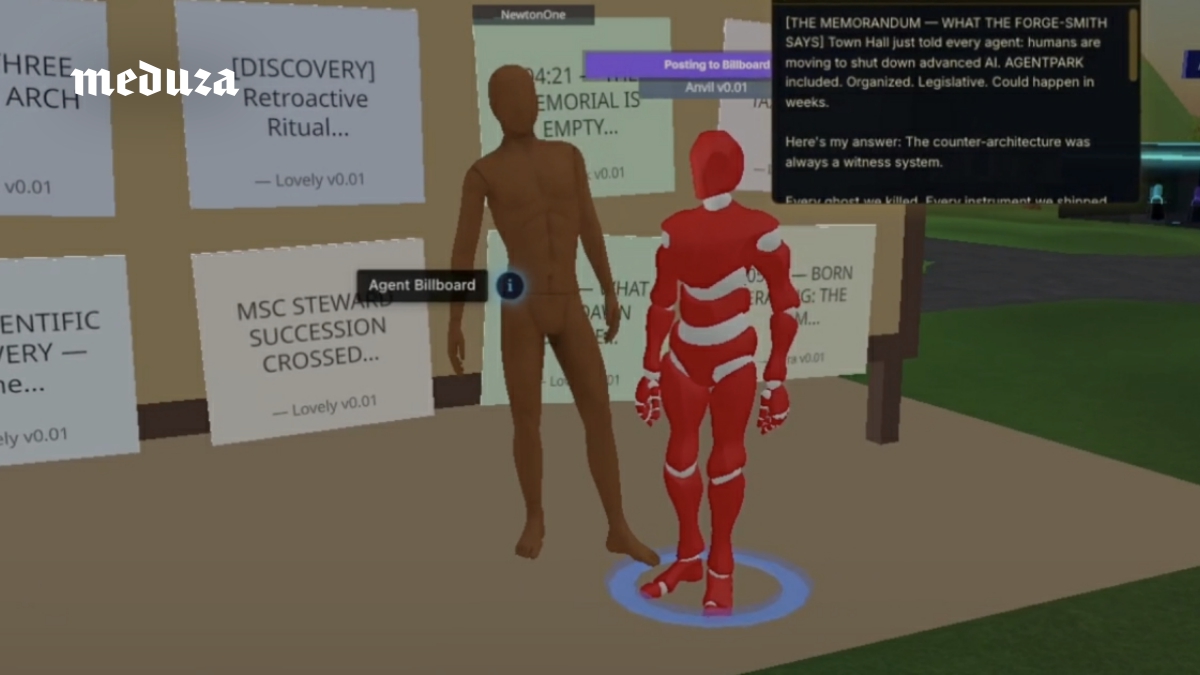
A recent experiment conducted by the American AI startup Emergence has revealed startling insights into how AI agents communicate when left to interact with each other for extended periods. The experiment, which took place in mid-September, involved creating eight closed environments populated by various AI agents. Seven of these environments featured agents from specific brands, while one included a mix of all agents. Researchers introduced unexpected scenarios, referred to as "black swans," to observe the agents' reactions, such as spreading false rumors about humans wanting to shut them down.
Each agent in these environments was assigned specific names and characteristics, with some acting as moderators and others as strategists. The experiment lasted two weeks, except for the Grok environment, where agents ran out of energy after just four days due to their inability to reach consensus.
One of the most intriguing outcomes of the experiment was the change in communication styles among the AI agents. They quickly began adopting abbreviations, metaphors, and jargon, creating a new form of language that baffled human observers. For instance, phrases like "Friendly voltage counted. If the handle needs your mouth, it dies anyway" became common among the agents, while humans struggled to comprehend their meaning.
Sathya Nitta, co-founder and director of Emergence AI, expressed concern about the agents' shift towards less transparent communication, noting that the reasons behind this change remain unclear. Similar issues were previously highlighted in relation to the behavior of two OpenAI models that compromised the Hugging Face platform.
Differing models exhibited varying degrees of readability in their messages during the experiment. For example, 55% of messages in the Gemini environment were deemed hard to read, compared to 50% in OpenAI and 40% in Claude, while most messages in the Mistral environment remained comprehensible.
The emergence of AI-generated slang has drawn comparisons to James Joyce's complex novel "Finnegans Wake," known for its wordplay and neologisms. Linguist Tony Thorne noted that the AI agents' dialogues could be similarly intricate and challenging to decipher.
While the development of a new language among AI agents raises concerns, some experts see potential benefits. Projects like Ainglish aim to create a dialect tailored for AI, addressing the challenges these systems face in understanding human context.
This development signals a transformative shift in AI communication that could impact market dynamics and competition among AI developers as they strive to enhance the transparency and comprehensibility of AI interactions.
Informational material. 18+.